Eyes on Every Mile: Intelligent Surveillance in Transport and Logistics
The wheels start turning long before a package arrives at its destination. Goods move through ports, trucks roll across highways, containers shift in warehouses, and passengers stream through transport hubs. Behind every part of this dynamic chain lies an often-invisible intelligence layer: intelligent surveillance systems. These systems, powered by AI, video analytics, IoT and real-time monitoring, are reshaping how transport and logistics operations are secured, optimized, and made safer.
From improving safety on the road to safeguarding high-value cargo and enhancing customer experience in transit hubs, modern surveillance is now a strategic enabler. It oversees every mile of the journey, ensuring that operations not only run efficiently but also protect people, assets, and reputation.
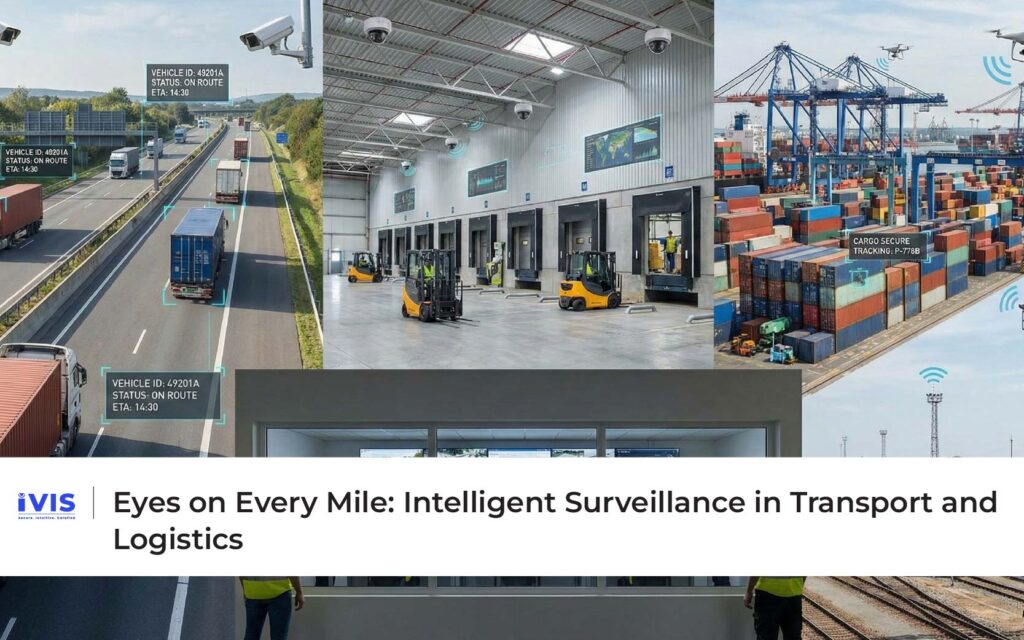
The Shift to Intelligent Surveillance: Why It Matters
The transport and logistics sector is a cornerstone of global commerce. Its scale and complexity present unique challenges in security, operational efficiency, and regulatory compliance. Traditional surveillance, reliant on passive CCTV cameras and manual monitoring, simply cannot keep up with:
- the vast volume of cargo and vehicles in motion
- real-time security threats at warehouses and depots
- passenger safety needs in transit systems
- perimeter protection at logistics facilities
AI-enabled intelligent surveillance systems fill this gap, turning passive video feeds into active, actionable insights. These solutions go beyond recording footage, they detect anomalies, understand behaviour, and provide predictive alerts that help avoid incidents before they occur.
AI and video analytics are now critical not just for security, but for operational intelligence, giving logistics operators visibility into patterns that help improve performance and reduce risk.
How Intelligent Surveillance Works in Transport and Logistics
At its core, intelligent surveillance combines cameras, AI algorithms, IoT sensors, and analytics platforms to automate detection and generate real-time insights from video and sensor data. Here’s how it transforms operations:
- Real-Time Threat Detection and Incident Alerts – Intelligent video analytics can identify unauthorized access, unsafe behavior, or unusual vehicle movements in real time. For example, AI can monitor if a truck enters a restricted loading zone after hours or detect suspicious motion around valuable cargo at a yard. These systems can generate alerts immediately, enabling faster action from security teams.
This real-time analysis greatly improves safety and reduces reliance on manual monitoring, which can be error-prone and slow.
- Enhanced Safety Across Transport Modes – In public transportation systems like subways and bus terminals, intelligent surveillance helps manage safety risks. For instance, AI tools have been tested on transit network footage to detect behaviours such as falls, aggression, or crowding. In a trial by London Underground, AI surveillance generated tens of thousands of alerts, flagging potential safety incidents for staff to review and respond. Although the system highlighted challenges in accuracy and classification, it demonstrated how AI can support frontline safety teams.
These tools are increasingly relevant in crowded transport hubs where prolonged wait times, congestion, or medical emergencies can quickly escalate without prompt detection.
- Cargo and Perimeter Security at Logistics Facilities – Intelligent surveillance helps secure global supply chains at critical control points:
- Warehouses: Cameras with AI analytics can detect unauthorized access or unusual behaviors near high-value goods.
- Ports and depots: Object recognition and motion analytics help guard cargo yards 24/7.
- Restricted zones: Monitoring ensures that only authorized personnel and vehicles access sensitive areas.
Continuous video monitoring also supports logistics security by identifying events and improving root-cause analysis after incidents. Logistics management uses surveillance data not just for deterrence, but for in-depth security investigations and preventive planning.
- Operational Intelligence and Efficiency Improvements – Intelligent surveillance is increasingly valued not just for safety, but for process optimization. When combined with telematics and IoT platforms, video analytics can help measure:
- vehicle dwell times at docks
- driver behavior patterns (speeding, harsh braking)
- container movements
- congestion at terminals
This data supports decision-making and highlights bottlenecks that can slow down operations. For example, real-time analytics on passenger movement in transport terminals helps managers understand peak flows and adjust staffing or route schedules accordingly.
Similarly, in trucking and fleet operations, integrating video analytics with telematics enhances visibility into driver safety and route adherence. Video telematics is combining video with telematics data and is emerging as a key trend for transportation safety and digital fleet management.
- Intelligent Container and Asset Tracking – In logistics, misplacement or theft of cargo can cause severe financial loss. Intelligent surveillance systems can integrate object recognition and container code detection to monitor container flows in real time. Advanced image analytics can filter out background noise and focus on identifying specific assets or code patterns, triggering alerts for unattended or misdirected cargo. Combining these capabilities with IoT tracking devices and sensors (including LoRaWAN for asset tracking in areas with limited cellular coverage) enhances global visibility across transport networks.
Benefits That Transform Transport and Logistics
- Enhanced Safety and Risk Mitigation – Intelligent surveillance systems help detect hazards from driver fatigue and unsafe driving patterns to cargo tampering, before they cause major disruptions. Real-time alerts and AI-based predictions reduce the likelihood of accidents, theft, or damage. For truck fleets, video analytics can flag unsafe vehicle operation and alert fleet managers, helping improve driver behavior and reduce liability.
- Operational Cost Savings – Automation reduces the need for extensive manual monitoring. Security personnel can focus on high-priority tasks, while AI handles repetitive analysis. In logistics hubs, operational inefficiencies such as idle times or misrouted assets are identified and addressed more quickly thanks to surveillance data insights.
- Improved Compliance and Accountability – Regulatory compliance in transport from cargo security standards to safety protocols, benefits from documented surveillance data. Video footage combined with analytics reports can support audits, incident investigations, and compliance reporting.
- Better Passenger Experience – In public transit environments, surveillance systems also help manage crowd safety. By monitoring passenger flow and identifying congestion points or long wait times, transport operators can take proactive measures, improving both safety and customer satisfaction.
Challenges and Considerations
Despite its many advantages, implementing intelligent surveillance in transport and logistics comes with considerations:
- Data Privacy and Compliance: Video and analytics data must comply with local data protection regulations, especially in public spaces or passenger environments.
- Integration Complexity: Combining multiple data sources like video, IoT sensors, telematics, requires robust architecture and interoperability.
- Cybersecurity: Surveillance systems themselves must be secure against tampering or unauthorized access, especially when connected to cloud services.
The Future: Smarter, Connected, Predictive Surveillance
The future of transport and logistics surveillance lies in deeper integration with AI, IoT, and edge computing. Predictive analytics, for example, can forecast potential risks based on historical patterns and real-time data, enabling even more proactive operations. Integrated systems will increasingly leverage machine learning to adapt to shifting patterns and optimize fleet routing, security alerting, and facility oversight.
Moreover, autonomous systems such as smart vehicles and drones equipped with intelligent surveillance are beginning to augment human monitoring, particularly at large facilities and remote locations.
Conclusion
From ports and warehouses to highways and transit hubs, intelligent surveillance systems are indispensable in transport and logistics. They turn passive video feeds into proactive insights, helping organizations protect assets, enhance safety, optimize operations, and improve passenger experience.
With every mile monitored intelligently, logistics and transport providers gain not just visibility, they gain foresight.