
Imagine a vast surveillance network spanning cameras, sensors, access controls, and analytics platforms. A single breach in that chain could expose the whole system: video feeds manipulated, threat alerts delayed, physical security compromised. In surveillance, cyber-resilience isn’t optional, it’s fundamental.
In a world where e-surveillance has moved from silos to interconnected ecosystems, building resilience across technology, process and people is essential. Here’s how to design and deploy a surveillance infrastructure that can absorb attacks, adapt under pressure and continue protecting assets, people and operations.
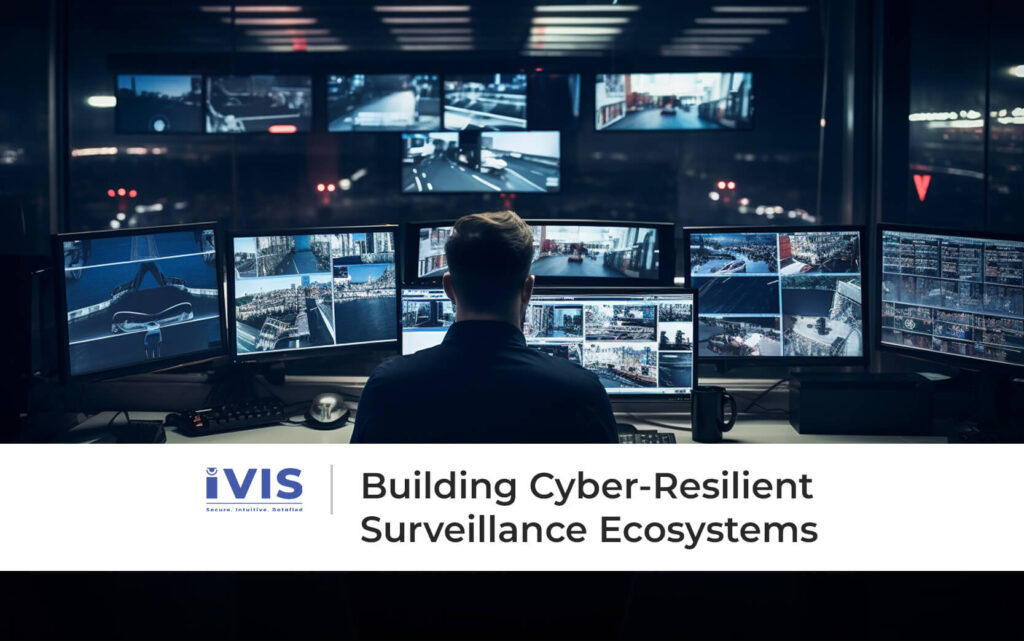
Modern surveillance systems have become expansive cyber-physical environments. They combine IP cameras, IoT sensors, edge devices, cloud platforms and analytics engines. Each link is a potential attack surface.
Statistics reveal the scale of the danger: according to the State of Cybersecurity Resilience 2025 report, only 13% of organisations possess the advanced cyber-capabilities needed to defend against today’s threats. And yet 63% of organisations remain highly exposed in both strategy and capability.
In surveillance ecosystems, that means a camera feed that’s intercepted, a sensor bypassed, or an analytics module manipulated could all lead to major operational or reputational damage.
Step 1: Map the Ecosystem: List all devices, networks, analytics platforms, storage systems and external interfaces. Know what you have and how it connects.
Step 2: Assess Risk & Prioritise: Which cameras are mission-critical? Which sensors feed into analytics? Which data stores hold archival footage? Prioritise protection accordingly.
Step 3: Secure Devices & Networks: Implement endpoint protection on cameras/NVRs, enforce firmware updates, segment networks, use encrypted communications and apply strong access controls.
Step 4: Enable Analytics & Response: Deploy detection engines that flag unusual device behaviour, anomaly traffic or unexpected access patterns. Set up incident workflows: alert → investigate → respond → recover.
Step 5: Ensure Redundancy & Recovery: Design backup systems, dual networks (edge + cloud), device fail-over, and offline modes for critical nodes so surveillance continues even if parts of the system are compromised.
Step 6: Vendor & Supply Chain Governance: Manage third-party risk: audit firmware, require vendor SOC-certifications, monitor supply-chain threats, and apply segmentation between vendor networks and mission-critical infrastructure.
Step 7: Training, Awareness & Governance: Operators must understand cyber risks, false-positives, incident escalation, and recovery procedures. Embed governance, audit logs, and accountability.
In modern surveillance ecosystems, trust and resilience go hand in hand. A breach in the video infrastructure undermines the security posture, damages brand trust and creates regulatory exposure. Conversely, a resilient system ensures continuity, protects operations and empowers organisations to act, not just watch.
Organisations looking to build cyber-resilient surveillance ecosystems need more than traditional VMS or cameras. They need architecture, analytics, governance and operations tied together. In that context, a partner that offers end-to-end surveillance services and cyber-resilience frameworks becomes invaluable.
That’s where IVIS offers difference, providing a surveillance platform designed for today’s cyber-threat landscape, with device security, analytics, edge-cloud orchestration and vendor-risk governance baked in.
Building a cyber-resilient surveillance ecosystem is a necessity. As surveillance grows more connected, distributed and intelligent, the risk surface expands. The answer lies in resilient design: layered security, hybrid architectures, continuous monitoring, strong vendor control, and human-in-loop response.
When you build for resilience instead of just visibility, your surveillance system stops being a risk factor—it becomes a protective force. Because in today’s world, being watched isn’t the same as being secure.