
Hospitality is built on a simple promise: comfort, care, and peace of mind. Guests step into hotels expecting safety to be seamless, service to be attentive, and experiences to feel effortless. Yet behind this calm exterior lies a complex operation, open lobbies, multiple entry points, high guest turnover, shared amenities, and staff working around the clock. Ensuring safety in such an environment is not optional; it is foundational to trust.
Modern hotels are discovering that security and service are no longer separate concerns. E-surveillance, powered by AI and intelligent video analytics, is redefining how hotels protect guests and staff while simultaneously enhancing operational efficiency and guest experience. The shift is clear: surveillance is moving from being a visible guardrail to an invisible service enabler.
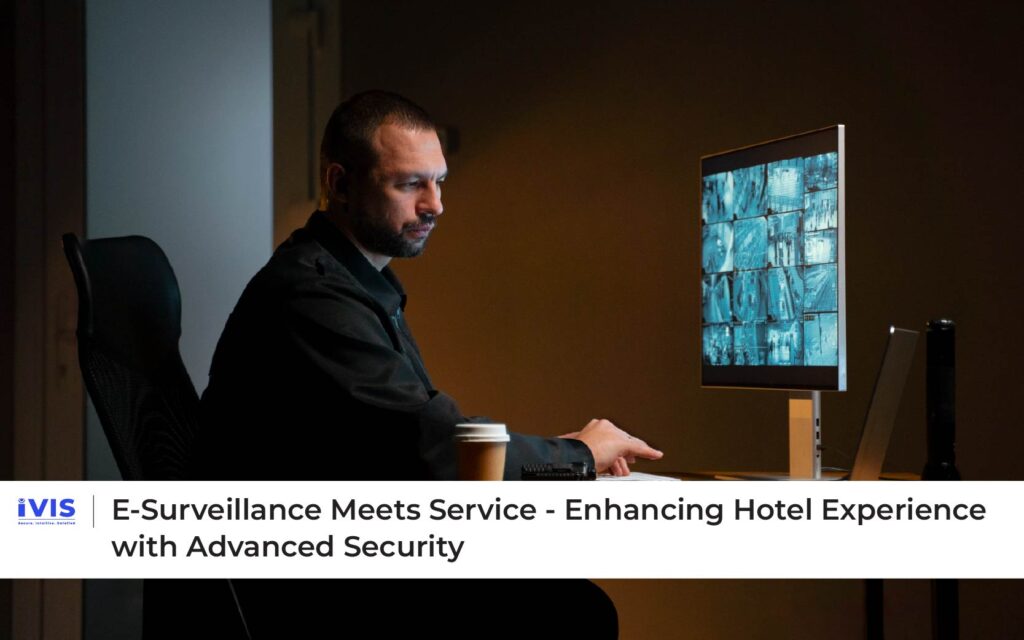
Hotels are uniquely exposed environments. Unlike offices or factories, they are designed to welcome the public. Guests, visitors, vendors, and staff move freely through shared spaces like – lobbies, corridors, elevators, restaurants, gyms, and parking areas. This openness, while essential to hospitality, creates security challenges.
According to the World Tourism Organization, safety and security are among the top factors influencing destination and hotel choice. At the same time, incidents such as theft, unauthorized access, and guest disputes continue to impact hotel operations worldwide. Traditional security methods, static CCTV cameras and manual monitoring, often react after incidents occur, offering limited prevention.
Modern hospitality demands a more proactive model. Hotels need security systems that can detect risks early, support staff decisions, and do so without disrupting the guest experience. This is where AI-powered e-surveillance becomes transformative.
E-surveillance goes beyond recording footage. It uses AI algorithms to analyze live video streams and identify patterns, behaviors, and anomalies in real time. In a hotel environment, this means understanding how spaces are used and recognizing when something deviates from the norm.
For example, intelligent surveillance can detect unauthorized access to staff-only areas, unusual loitering in corridors during late hours, or tailgating into restricted zones. It can monitor parking areas for suspicious activity, flag unattended objects in public spaces, or alert staff when crowd density increases unexpectedly.
Research published in Hospitality Net highlights that AI-enabled surveillance systems improve situational awareness while reducing reliance on constant human monitoring. By filtering noise and prioritizing alerts, these systems allow hotel teams to focus on service rather than screen-watching.
One of the greatest challenges in hospitality security is visibility. Guests want to feel safe, but not watched. Advanced e-surveillance addresses this balance by operating quietly in the background.
Instead of relying on overt security presence, hotels can use intelligent analytics to detect risks early and respond discreetly. For instance, if analytics identify abnormal movement near guest rooms or elevators, staff can intervene subtly, often before guests notice anything unusual.
Studies from Cornell University’s School of Hotel Administration note that perceived safety strongly correlates with guest satisfaction and loyalty. When security measures are effective yet unobtrusive, guests feel protected without feeling restricted.
E-surveillance is not just about guests; it is equally about empowering hotel staff. Housekeeping, front desk teams, and security personnel often work under pressure, especially during peak occupancy.
Intelligent surveillance provides operational insights that help teams work more efficiently. Analytics can highlight high-traffic areas requiring more staff attention, detect bottlenecks at check-in zones, or identify areas where service delays frequently occur. This data enables better staffing decisions and smoother workflows.
According to McKinsey, data-driven operations in hospitality lead to measurable improvements in efficiency and service quality. Surveillance analytics contribute to this intelligence by offering a visual and behavioral layer that complements operational data.
Hotels manage valuable assets, from guest belongings to in-house inventory, equipment, and cash-handling areas. Loss prevention remains a persistent challenge, particularly in large properties and resorts.
E-surveillance strengthens asset protection by monitoring access to storage rooms, back-of-house areas, and service corridors. Video analytics can correlate access events with movement patterns, helping identify unauthorized activity or procedural lapses.
Deloitte’s hospitality risk studies emphasize that proactive monitoring reduces shrinkage and internal losses while improving audit readiness. Surveillance, when integrated with access control and policy enforcement, becomes a key pillar of risk management.
Hospitality surveillance must operate within strict ethical boundaries. Guests expect privacy, especially in personal spaces. Responsible e-surveillance avoids monitoring private areas such as guest rooms, restrooms, and changing facilities.
Modern systems increasingly rely on behaviour-based analytics rather than identity recognition. Techniques such as anonymized tracking and event-based alerts ensure risks are detected without unnecessary personal identification.
Global frameworks like GDPR and UNESCO’s Recommendation on the Ethics of Artificial Intelligence stress proportionality, transparency, and accountability. Clear signage, defined data retention policies, and restricted access to footage help hotels maintain trust and regulatory compliance.
As hotel operations grow more complex, often spanning multiple properties, there is a need for centralized, intelligent oversight. This is where IVIS plays a meaningful role.
IVIS enables hotels to unify surveillance across lobbies, corridors, parking areas, and back-of-house spaces into a single operational view. By combining real-time video analytics with centralized monitoring, IVIS supports early detection of safety risks and faster, more coordinated responses.
Designed for hybrid environments, IVIS operates across edge, on-prem, and cloud deployments, ensuring performance even in large or geographically distributed hotel chains. Its policy-driven governance and secure data handling help hotels align advanced surveillance with privacy and regulatory requirements.
In hospitality settings, IVIS transforms surveillance from a reactive security layer into a proactive service enabler, supporting both guest safety and operational excellence.
The future of hotel security lies in prediction and personalization. Surveillance systems will increasingly forecast risks based on historical patterns, occupancy trends, and contextual data such as events or seasonal demand.
Edge analytics will enable faster, on-site decision-making, while centralized platforms will provide strategic oversight across properties. Integration with property management systems and service workflows will further blur the line between security and service.
Hotels that embrace intelligent, ethical surveillance will be better positioned to deliver safe, seamless, and memorable experiences, where security quietly supports hospitality rather than overshadowing it.
In today’s hospitality landscape, security and service are inseparable. Guests expect safety as part of the experience, not as a visible barrier. E-surveillance meets this expectation by delivering intelligent, proactive protection that enhances comfort rather than detracts it.
When deployed responsibly, advanced surveillance improves guest trust, supports staff efficiency, protects assets, and strengthens brand reputation. Platforms like IVIS demonstrate how hotels can achieve this balance, integrating security into the very fabric of service.
In the end, the best hotel security is the kind guests never notice, but always appreciate.