
Factory floors today look very different from what they did even a decade ago. Conveyor belts now move in sync with robotic arms. Sensors communicate with machines in real time. Autonomous vehicles transport materials across production lines. Automation has transformed manufacturing into a highly efficient, data-driven environment.
Yet with this transformation comes a new challenge: security. As factories become smarter and more connected, they also become more exposed to safety risks, unauthorized access, operational disruptions, and cyber-physical threats. Securing factories in the age of automation is no longer just about locks and guards. It requires intelligent, integrated surveillance systems that can keep pace with machines that never sleep.
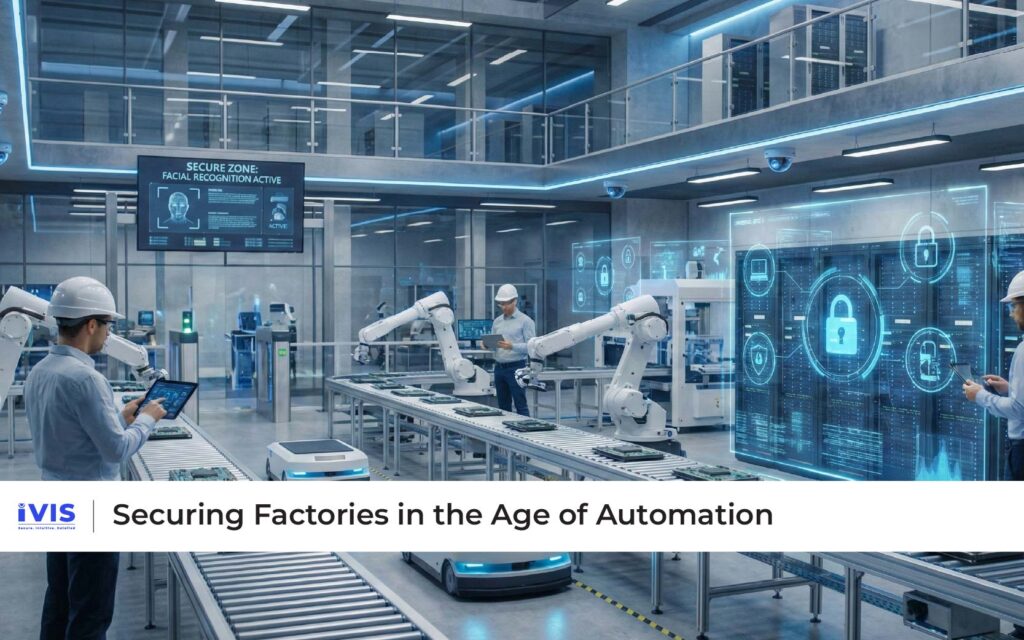
Automation has introduced speed, scale, and complexity into manufacturing. A modern factory may run 24/7, with limited human presence during night shifts. Machines operate at high speeds, often in close proximity to people. Supply chains flow in and out continuously, bringing vendors, vehicles, and contractors into the facility.
According to the World Economic Forum, advanced manufacturing environments are among the most complex operational ecosystems due to the convergence of physical systems, digital platforms, and human workers. This convergence increases both productivity and risk.
Traditional surveillance systems struggle in such environments. Static cameras that merely record footage cannot detect unsafe behavior, restricted-area breaches, or early warning signs of failure. Manual monitoring is also ineffective at scale. As factories automate, security must automate alongside them.
Intelligent surveillance brings AI-driven analytics into the heart of factory security. Instead of simply capturing video, these systems continuously analyze live feeds to detect patterns, anomalies, and risks in real time.
AI-powered video analytics can identify unauthorized entry into restricted zones, monitor machine-human interactions, and flag unusual movement near critical assets. In high-risk areas such as robotic cells or heavy machinery zones, surveillance systems can detect when safety protocols are violated, such as missing protective gear or unsafe proximity to moving equipment.
Research published by McKinsey highlights that AI-enabled monitoring systems significantly reduce incident response times in industrial environments by providing real-time visibility and actionable alerts. This shift from reactive review to proactive detection is essential in automated factories where seconds matter.
Automation does not eliminate human presence; it reshapes it. Workers now supervise machines, manage exceptions, and perform specialized tasks. This hybrid environment where humans and machines coexist, introduces unique safety challenges.
The International Labour Organization reports that manufacturing remains one of the sectors with the highest rates of workplace injuries, often due to interaction with machinery. Intelligent surveillance helps mitigate these risks by monitoring behavior rather than just spaces.
For example, AI-based systems can detect when a worker enters a hazardous zone without authorization, when safety barriers are bypassed, or when abnormal motion suggests a fall or injury. Early alerts allow supervisors to intervene immediately, reducing the likelihood of serious accidents.
In automated factories, surveillance becomes an extension of safety culture—reinforcing compliance without slowing down operations.
Factories house valuable assets beyond physical equipment. Designs, processes, and proprietary workflows represent significant intellectual property. Unauthorized access, theft, or sabotage can cause severe financial and reputational damage.
Intelligent surveillance strengthens asset protection by providing layered security across entry points, production areas, and storage zones. Video analytics can detect tailgating at access-controlled doors, unusual after-hours activity, or abnormal vehicle movements within factory premises.
According to a report by Deloitte on manufacturing risk, internal theft and unauthorized access remain persistent threats, particularly in large, distributed facilities. Surveillance systems that combine video intelligence with access control data create a stronger defense by correlating physical movement with authorization records.
Security in automated factories is not only about preventing incidents; it is also about ensuring continuity. A halted production line can cost manufacturers thousands of dollars per minute.
Surveillance data provides valuable operational insights. By analyzing movement patterns, machine downtime events, and workflow congestion, factories can identify inefficiencies that impact both security and productivity. For example, repeated congestion near a loading dock may indicate process bottlenecks that increase accident risk.
The World Bank notes that data-driven monitoring improves industrial efficiency by enabling predictive maintenance and informed decision-making. Surveillance systems contribute to this intelligence by offering a visual and analytical layer that complements machine data.
As factories adopt Industry 4.0 technologies, physical security and cybersecurity become deeply intertwined. Surveillance cameras, sensors, and analytics platforms are connected to networks that also control machines and data systems.
The U.S. Cybersecurity and Infrastructure Security Agency (CISA) emphasizes that physical breaches can often lead to cyber incidents, especially in industrial environments. An intruder gaining physical access to a control room or network port can compromise entire operations.
Modern surveillance platforms address this by securing both endpoints and data flows. Encryption, access controls, and audit trails ensure that surveillance systems themselves do not become vulnerabilities. Ethical and secure deployment is essential for maintaining trust in automated environments.
In the age of automation, factories require surveillance platforms that do more than monitor they must integrate, analyze, and orchestrate. This is where platforms like IVIS play a critical role.
IVIS enables factories to unify video feeds, sensor inputs, and operational data into a centralized, intelligent surveillance environment. By combining real-time monitoring with AI-driven analytics, IVIS supports early detection of safety risks, unauthorized access, and operational anomalies. Its architecture is designed to scale across large, multi-site industrial operations, ensuring consistent visibility without compromising performance.
Equally important, IVIS aligns surveillance with governance and compliance needs. Policy-driven controls, secure data handling, and transparent workflows ensure that security measures support productivity while respecting workforce trust. In automated factories, IVIS acts as a digital nerve center connecting safety, security, and operations into a cohesive whole.
One of the most sensitive aspects of factory surveillance is its impact on workers. Surveillance must enhance safety and security without creating a culture of constant monitoring or mistrust.
Transparency is key. Clearly communicating why surveillance exists, how data is used, and what protections are in place helps build acceptance. Many factories adopt behavior-focused analytics rather than identity-focused tracking, ensuring that systems detect risks without targeting individuals unnecessarily.
UNESCO’s Recommendation on the Ethics of Artificial Intelligence emphasizes proportionality and accountability in workplace monitoring. Applying these principles ensures that surveillance remains a tool for protection, not control.
As automation deepens, surveillance systems will continue to evolve. Edge computing will enable faster, on-site analytics without reliance on centralized servers. Predictive models will forecast risks based on historical patterns and real-time conditions. Integration with robotics, IoT sensors, and digital twins will create holistic views of factory operations.
In this future, surveillance will not be a separate layer; it will be embedded into the operational fabric of manufacturing. Security decisions will be informed, timely, and aligned with business goals.
Factories that invest in intelligent, ethical surveillance today will be better positioned to scale automation tomorrow without compromising safety, resilience, or trust.
Automation has redefined what factories can achieve. It has also redefined how they must be secured. In an environment where machines operate continuously and humans interact closely with technology, intelligent surveillance becomes indispensable.
By providing real-time visibility, enhancing safety, protecting assets, and supporting operational continuity, modern surveillance systems safeguard factories against both traditional and emerging risks. Platforms like IVIS help manufacturers bridge the gap between automation and security, ensuring that progress is protected at every step.
Securing factories in the age of automation is ultimately about enabling innovation with confidence where productivity, safety, and trust move forward together.