Write to us about any queries you have

Contact Form Demo

continuous monitoring

Securing the Grid: E-Surveillance in Energy and Utility Operations
Blog

Securing the Grid: E-Surveillance in Energy and Utility Operations

Securing the Grid: E-Surveillance in Energy and Utility Operations Energy and utility networks are the silent backbone of modern life. Electricity powers homes and industries, water systems sustain cities, and gas pipelines fuel economies. These systems are expected to operate continuously, reliably, and safely—often without public visibility. Yet behind the scenes, energy and utility operations face mounting security challenges that extend far beyond physical fences and locked doors.  As grids become smarter and more interconnected, they also become more vulnerable. Substations, transmission lines, control rooms, renewable energy farms, and distribution networks are spread across vast geographies. Securing these assets requires more than periodic patrols or passive cameras. E-surveillance, powered by AI and intelligent analytics, is emerging as a critical layer of resilience, helping utilities protect infrastructure, prevent disruptions, and ensure uninterrupted service to citizens.  Why Energy and Utilities Are High-Risk, High-Impact Environments Energy and utility infrastructure is classified globally as critical infrastructure. Any disruption, whether due to vandalism, theft, accidents, or deliberate attacks, can have cascading effects on public safety and economic stability. The World Economic Forum consistently ranks infrastructure failure among the most severe global risks because of its wide-ranging impact.  Unlike compact facilities, utility assets are often remote and unmanned. Power substations may be located miles from urban centers. Solar farms and wind installations span open terrain. Pipelines and transmission lines traverse borders and difficult landscapes. This geographic dispersion makes continuous human monitoring impractical.  At the same time, utilities are adopting automation, IoT sensors, and digital control systems to improve efficiency. While these technologies enhance performance, they also increase exposure to physical intrusion and cyber-physical threats. Surveillance, therefore, becomes a foundational capability, not just for security, but for operational continuity.  The Evolution from Traditional Surveillance to Intelligent Monitoring Traditional surveillance in utilities relied on fixed cameras and manual review. Footage was often examined only after an incident occurred. This reactive model offers limited prevention and delayed response, both unacceptable in high-impact environments like power generation or water treatment facilities.  Modern e-surveillance systems operate differently. They use AI-driven video analytics to analyze live feeds continuously, detecting anomalies and risks as they emerge. Instead of simply recording movement, these systems understand context, distinguishing between routine maintenance activity and unauthorized access, or between wildlife movement and human intrusion.  Research published by IEEE highlights that intelligent video analytics significantly improve detection accuracy in industrial environments by reducing false positives and focusing attention on meaningful events. For utilities, this means faster response and fewer blind spots across critical assets.  Protecting Physical Assets and Perimeters One of the primary roles of e-surveillance in energy and utility operations is perimeter and asset protection. Substations, control rooms, and generation facilities are sensitive zones where unauthorized access can lead to outages or safety hazards.  AI-powered surveillance can detect perimeter breaches, tailgating at secure entrances, or loitering near restricted areas. In remote sites, edge analytics enable real-time alerts even when connectivity to centralized systems is limited. This ensures that security teams can respond promptly, regardless of location.  The U.S. Cybersecurity and Infrastructure Security Agency (CISA) emphasizes that physical security is a critical component of infrastructure resilience, especially as physical breaches can often precede cyber incidents. E-surveillance strengthens this first line of defense by providing continuous visibility and early warning. Enhancing Safety for Personnel and Contractors Energy and utility operations involve hazardous environments. High-voltage equipment, pressurized systems, and heavy machinery pose inherent risks to workers and contractors. Ensuring safety compliance is as important as preventing intrusion.  Intelligent surveillance systems can monitor safety zones and detect violations such as missing protective equipment, unsafe proximity to live equipment, or entry into restricted operational areas. Early alerts allow supervisors to intervene before accidents occur.  According to the International Labour Organization, proactive monitoring and early hazard detection significantly reduce workplace accidents in industrial settings. Surveillance analytics contribute to this by reinforcing safety protocols without slowing down operations.  Supporting Operational Continuity and Incident Response In utilities, downtime is costly and disruptive. Even brief outages can affect hospitals, transport systems, and emergency services. E-surveillance supports continuity by enabling rapid situational awareness during incidents.  Live video feeds provide control centers with real-time insight during equipment failures, natural disasters, or security events. This visibility helps teams assess conditions accurately, deploy field crews efficiently, and coordinate responses across departments.  The World Bank notes that data-driven infrastructure management improves resilience by enabling faster, better-informed decision-making during disruptions. Surveillance systems contribute a critical visual and analytical layer to this intelligence.  Surveillance and Compliance in Regulated Environments Energy and utility sectors operate under strict regulatory oversight. Operators must demonstrate compliance with safety, security, and operational standards. E-surveillance supports these requirements by creating objective records of events and activities.  Video data, when governed properly, helps validate adherence to procedures, investigate incidents, and support audits. Surveillance also enhances transparency and accountability, reducing ambiguity in post-incident reviews.  Regulatory bodies such as the North American Electric Reliability Corporation (NERC) emphasize the importance of monitoring and documentation as part of critical infrastructure protection frameworks. Intelligent surveillance systems align well with these expectations.  Balancing Security with Privacy and Ethics While utilities primarily operate in industrial and remote settings, surveillance must still be deployed responsibly. Workers, contractors, and nearby communities expect that monitoring is proportional, transparent, and secure.  Ethical e-surveillance focuses on behavior and risk detection rather than unnecessary personal identification. Data access controls, defined retention policies, and clear governance frameworks are essential.  UNESCO’s Recommendation on the Ethics of Artificial Intelligence highlights the importance of accountability and proportionality in AI-enabled monitoring systems. Applying these principles ensures that surveillance enhances trust rather than eroding it.  The Role of IVIS in Energy and Utility E-Surveillance As energy and utility operations grow more distributed and automated, organizations need platforms that unify visibility across assets while maintaining governance and scalability. This is where IVIS plays a strategic role.  IVIS collaborated with Scanalitix, enables utilities to centralize surveillance across substations, generation sites, control rooms, and field operations into a single intelligent platform. By combining real-time video analytics with centralized monitoring, IVIS supports early detection of security and safety risks across geographically dispersed assets.  Its hybrid architecture, spanning edge, on-prem, and cloud environments, ensures reliable performance even at remote sites, while policy-driven controls help align surveillance with regulatory and ethical requirements. In energy and utility operations, IVIS acts as an operational nerve center, connecting security, safety, and resilience
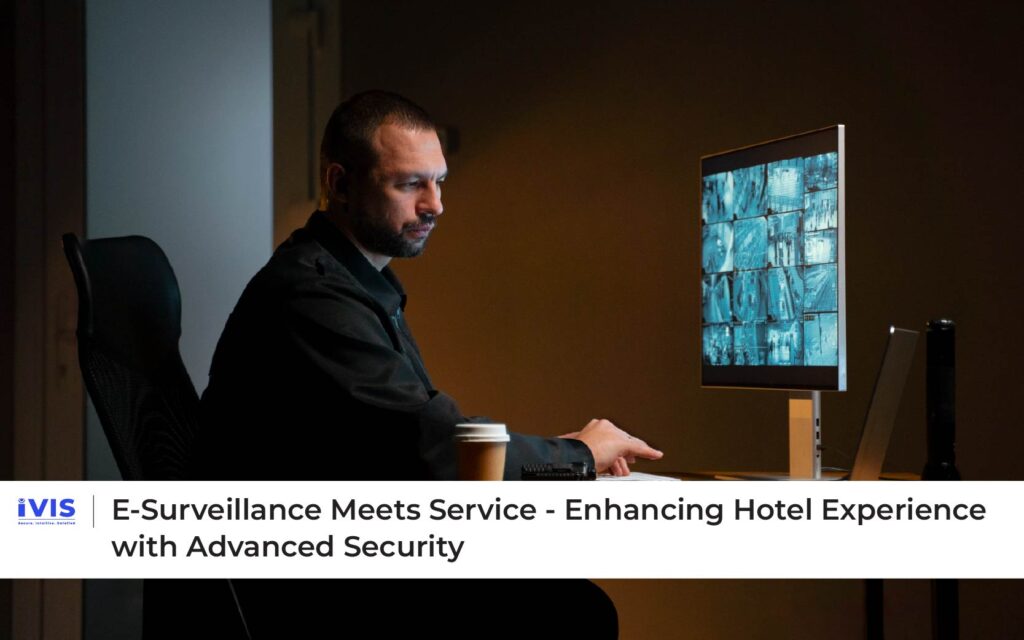
E-Surveillance Meets Service - Enhancing Hotel Experience with Advanced Security
Blog

E-Surveillance Meets Service – Enhancing Hotel Experience with Advanced Security 

E-Surveillance Meets Service – Enhancing Hotel Experience with Advanced Security Hospitality is built on a simple promise: comfort, care, and peace of mind. Guests step into hotels expecting safety to be seamless, service to be attentive, and experiences to feel effortless. Yet behind this calm exterior lies a complex operation, open lobbies, multiple entry points, high guest turnover, shared amenities, and staff working around the clock. Ensuring safety in such an environment is not optional; it is foundational to trust.  Modern hotels are discovering that security and service are no longer separate concerns. E-surveillance, powered by AI and intelligent video analytics, is redefining how hotels protect guests and staff while simultaneously enhancing operational efficiency and guest experience. The shift is clear: surveillance is moving from being a visible guardrail to an invisible service enabler.  Why Hotel Security Needs a New Approach Hotels are uniquely exposed environments. Unlike offices or factories, they are designed to welcome the public. Guests, visitors, vendors, and staff move freely through shared spaces like – lobbies, corridors, elevators, restaurants, gyms, and parking areas. This openness, while essential to hospitality, creates security challenges.  According to the World Tourism Organization, safety and security are among the top factors influencing destination and hotel choice. At the same time, incidents such as theft, unauthorized access, and guest disputes continue to impact hotel operations worldwide. Traditional security methods, static CCTV cameras and manual monitoring, often react after incidents occur, offering limited prevention.  Modern hospitality demands a more proactive model. Hotels need security systems that can detect risks early, support staff decisions, and do so without disrupting the guest experience. This is where AI-powered e-surveillance becomes transformative.  What E-Surveillance Looks Like in a Modern Hotel E-surveillance goes beyond recording footage. It uses AI algorithms to analyze live video streams and identify patterns, behaviors, and anomalies in real time. In a hotel environment, this means understanding how spaces are used and recognizing when something deviates from the norm.  For example, intelligent surveillance can detect unauthorized access to staff-only areas, unusual loitering in corridors during late hours, or tailgating into restricted zones. It can monitor parking areas for suspicious activity, flag unattended objects in public spaces, or alert staff when crowd density increases unexpectedly.  Research published in Hospitality Net highlights that AI-enabled surveillance systems improve situational awareness while reducing reliance on constant human monitoring. By filtering noise and prioritizing alerts, these systems allow hotel teams to focus on service rather than screen-watching.  Enhancing Guest Safety Without Compromising Comfort One of the greatest challenges in hospitality security is visibility. Guests want to feel safe, but not watched. Advanced e-surveillance addresses this balance by operating quietly in the background.  Instead of relying on overt security presence, hotels can use intelligent analytics to detect risks early and respond discreetly. For instance, if analytics identify abnormal movement near guest rooms or elevators, staff can intervene subtly, often before guests notice anything unusual.  Studies from Cornell University’s School of Hotel Administration note that perceived safety strongly correlates with guest satisfaction and loyalty. When security measures are effective yet unobtrusive, guests feel protected without feeling restricted.  Supporting Staff and Improving Operations E-surveillance is not just about guests; it is equally about empowering hotel staff. Housekeeping, front desk teams, and security personnel often work under pressure, especially during peak occupancy.  Intelligent surveillance provides operational insights that help teams work more efficiently. Analytics can highlight high-traffic areas requiring more staff attention, detect bottlenecks at check-in zones, or identify areas where service delays frequently occur. This data enables better staffing decisions and smoother workflows.  According to McKinsey, data-driven operations in hospitality lead to measurable improvements in efficiency and service quality. Surveillance analytics contribute to this intelligence by offering a visual and behavioral layer that complements operational data.  Protecting Assets and Preventing Losses Hotels manage valuable assets, from guest belongings to in-house inventory, equipment, and cash-handling areas. Loss prevention remains a persistent challenge, particularly in large properties and resorts.  E-surveillance strengthens asset protection by monitoring access to storage rooms, back-of-house areas, and service corridors. Video analytics can correlate access events with movement patterns, helping identify unauthorized activity or procedural lapses.  Deloitte’s hospitality risk studies emphasize that proactive monitoring reduces shrinkage and internal losses while improving audit readiness. Surveillance, when integrated with access control and policy enforcement, becomes a key pillar of risk management. Privacy, Ethics, and Responsible Surveillance Hospitality surveillance must operate within strict ethical boundaries. Guests expect privacy, especially in personal spaces. Responsible e-surveillance avoids monitoring private areas such as guest rooms, restrooms, and changing facilities.  Modern systems increasingly rely on behaviour-based analytics rather than identity recognition. Techniques such as anonymized tracking and event-based alerts ensure risks are detected without unnecessary personal identification.  Global frameworks like GDPR and UNESCO’s Recommendation on the Ethics of Artificial Intelligence stress proportionality, transparency, and accountability. Clear signage, defined data retention policies, and restricted access to footage help hotels maintain trust and regulatory compliance.  The Role of IVIS in Hospitality E-Surveillance As hotel operations grow more complex, often spanning multiple properties, there is a need for centralized, intelligent oversight. This is where IVIS plays a meaningful role.  IVIS enables hotels to unify surveillance across lobbies, corridors, parking areas, and back-of-house spaces into a single operational view. By combining real-time video analytics with centralized monitoring, IVIS supports early detection of safety risks and faster, more coordinated responses.  Designed for hybrid environments, IVIS operates across edge, on-prem, and cloud deployments, ensuring performance even in large or geographically distributed hotel chains. Its policy-driven governance and secure data handling help hotels align advanced surveillance with privacy and regulatory requirements.  In hospitality settings, IVIS transforms surveillance from a reactive security layer into a proactive service enabler, supporting both guest safety and operational excellence.  The Future of Security in Hospitality The future of hotel security lies in prediction and personalization. Surveillance systems will increasingly forecast risks based on historical patterns, occupancy trends, and contextual data such as events or seasonal demand.  Edge analytics will enable faster, on-site decision-making, while centralized platforms will provide strategic oversight across properties. Integration with property management systems and service workflows will further blur the line between security and service.  Hotels that embrace intelligent, ethical surveillance will be better positioned to deliver safe, seamless, and memorable experiences, where security quietly supports hospitality rather than overshadowing it.  Conclusion In today’s hospitality landscape, security

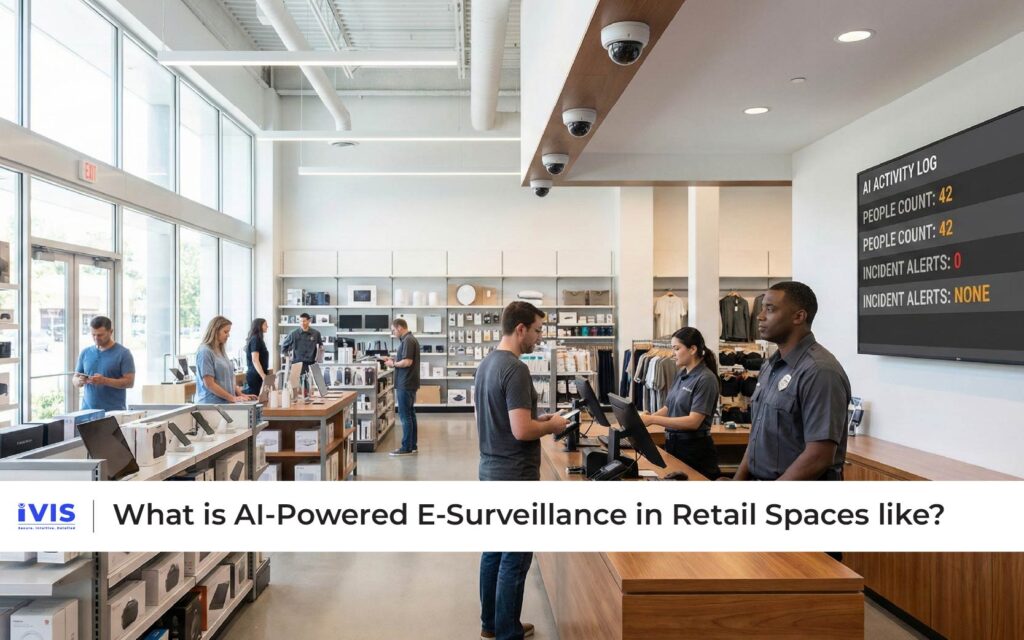
What is AI-Powered E-Surveillance in Retail Spaces like?
Blog

What is AI-Powered E-Surveillance in Retail Spaces like?

What is AI-Powered E-Surveillance in Retail Spaces like? A retail store today is no longer just a place where products sit on shelves waiting to be picked up. It is a dynamic environment shaped by customer movement, browsing behaviour, inventory flow, staff interaction, and constant operational decision-making. In this fast-paced setting, traditional surveillance of static cameras recording footage for later review, no longer meet the needs of modern retail.  This is where AI-powered e-surveillance enters the picture. Instead of simply watching, intelligent surveillance systems now understand what is happening on the shop floor. They analyze behavior in real time, identify risks, optimize operations, and even contribute to better customer experiences. In retail spaces, surveillance has evolved from a back-office security function into a strategic business tool.  Why Retail E-Surveillance Needed to Evolve Retailers face a unique combination of challenges. Shrinkage, employee theft, shoplifting, and organized retail crime remain persistent threats. At the same time, stores must manage high footfall, seasonal crowd surges, staffing efficiency, and customer satisfaction, all while protecting privacy and maintaining trust.  According to the National Retail Security Survey, shrinkage continues to cost retailers billions annually, driven by theft, fraud, and operational errors. Traditional CCTV systems help investigate incidents after they occur, but they do little to prevent losses in real time.  Human monitoring also has limits. Security teams cannot continuously observe dozens of camera feeds without fatigue or error. As store networks scale across multiple locations, the gap between what cameras capture and what teams can act on widens. AI-powered surveillance addresses this gap by automating detection, prioritizing alerts, and enabling faster, smarter responses.  What Makes E-Surveillance “AI-Powered” in Retail AI-powered e-surveillance combines video feeds with machine learning and analytics to interpret activity as it happens. Instead of detecting basic motion, these systems recognize patterns, behaviors, and context.  For example, AI models can distinguish between normal customer browsing and suspicious behavior such as repeated concealment attempts, loitering near high-value items, or unusual exit patterns. They can also identify unattended objects, restricted-area access, or after-hours movement inside the store.  Research published in IEEE Access highlights how intelligent video analytics significantly reduce false alarms by understanding context rather than reacting to every movement. This is especially important in retail environments where activity is constant and varied.  Loss Prevention That Is Proactive, Not Reactive One of the most visible impacts of AI-powered surveillance in retail is improved loss prevention. Rather than reviewing footage after shrinkage is discovered, retailers can detect suspicious behavior in real time and intervene early.  Video analytics systems analyze dwell time, object interaction, and movement trajectories to flag potential theft risks. Alerts are prioritized based on severity, enabling staff to respond discreetly, often before a loss occurs. This proactive approach reduces confrontation and improves store safety.  Studies from retail security firms show that AI-enabled surveillance can significantly lower shrinkage rates by identifying repeat offenders and organized theft patterns across multiple locations. The value lies not just in stopping a single incident, but in uncovering trends that traditional systems miss.  Enhancing Customer Experience Through Intelligence Surveillance in retail is no longer only about security. AI-powered systems also provide insights into customer behavior that can improve store performance.  By analyzing foot traffic patterns, heatmaps, and queue lengths, retailers gain visibility into how customers move through the store. This data helps optimize store layouts, product placement, and staffing schedules. For example, identifying congestion near checkout counters allows managers to deploy additional staff before wait times increase.  According to McKinsey, retailers that use data-driven insights to optimize in-store operations see measurable improvements in customer satisfaction and conversion rates. When surveillance analytics are used responsibly, they support smoother experiences without intruding on personal privacy.  Operational Efficiency and Workforce Support Retail operations depend heavily on staff coordination. AI-powered surveillance supports workforce efficiency by identifying operational gaps rather than monitoring individuals.  Analytics can highlight understaffed zones, delayed replenishment, or inefficient workflows. Managers can make informed decisions about resource allocation, reducing burnout and improving service consistency.  Importantly, modern systems focus on activity patterns, not personal profiling. This distinction is critical for maintaining employee trust. When used transparently, surveillance becomes a support system, helping teams work smarter rather than feel watched.  Privacy, Ethics, and Responsible Deployment Retail surveillance operates in public and semi-public spaces, making privacy a central concern. Ethical AI-powered surveillance prioritizes transparency, proportionality, and data minimization.  Global frameworks such as GDPR and UNESCO’s Recommendation on the Ethics of Artificial Intelligence emphasize that surveillance must be necessary, limited in scope, and accountable. Many retail systems now use anonymized analytics—such as counting, movement tracking, or behavior detection without facial identification—unless identity verification is legally justified.  Clear signage, defined data retention policies, and restricted access controls help retailers maintain customer trust. Responsible deployment ensures that surveillance protects both the business and the people inside it.  The Role of IVIS in AI-Powered Retail Surveillance As retail surveillance grows more intelligent, platforms must bring together security, analytics, and governance in a unified way. This is where IVIS plays a meaningful role.  IVIS enables retailers to consolidate video feeds, analytics, and operational data into a centralized, intelligent surveillance environment. By combining real-time video analytics with contextual insights, IVIS supports proactive loss prevention, operational visibility, and faster response to incidents across single or multi-store networks.  Designed to operate across edge, on-prem, and cloud environments, IVIS ensures scalability without compromising performance or compliance. Its policy-driven architecture helps retailers align advanced surveillance capabilities with ethical standards and regulatory requirements. In retail spaces, IVIS transforms surveillance from a reactive security layer into a proactive intelligence platform, supporting both protection and performance.  What the Future Looks Like for Retail Surveillance AI-powered surveillance in retail will continue to evolve toward prediction rather than detection. Systems will increasingly forecast risks based on historical behavior, time-of-day patterns, and contextual factors such as promotions or seasonal demand.  Edge computing will enable faster on-site analytics, reducing reliance on centralized processing. Integration with inventory systems, POS data, and customer flow analytics will provide a holistic view of store operations.  The most successful retailers will be those that use surveillance responsibly leveraging intelligence to enhance safety, efficiency, and experience, while remaining transparent and privacy-conscious.  Conclusion AI-powered e-surveillance in retail spaces is no longer just about watching cameras. It is about understanding environments, anticipating risks, and supporting better decisions in real time.  When deployed responsibly, intelligent surveillance helps retailers reduce losses, improve customer experiences, support staff, and operate more efficiently. Platforms like IVIS demonstrate

Hybrid Surveillance Models: Bridging Cloud, Edge, and On-Prem Systems
Blog

Hybrid Surveillance Models: Bridging Cloud, Edge, and On-Prem Systems 

Hybrid Surveillance Models: Bridging Cloud, Edge, and On-Prem Systems Security today looks nothing like it did a decade ago. Surveillance systems have evolved from simple CCTV setups to intelligent, analytics-driven ecosystems supporting real-time threat detection, automation, and predictive insights. However, this evolution has also brought a fundamental challenge: where should all this video and data be processed?  Should it live in the cloud? Stay on-premises? Or be analyzed at the network edge?  Increasingly, the answer is all three; through a hybrid surveillance model that blends cloud scalability, edge speed, and on-prem stability into one cohesive solution. As organizations scale their physical and digital footprint, hybrid models ensure surveillance remains resilient, cost-efficient, and future-ready.  This is the new backbone of modern security and here’s why the shift is happening.  Why Hybrid Surveillance Matters Today The explosion of AI video analytics, 4K/8K IP cameras, IoT sensors, and multi-location operations has made centralized architectures insufficient. A single organization may generate terabytes of video every day. Sending all this footage to the cloud is costly and bandwidth-intensive; processing everything on-prem is equally limiting.  That’s why 72% of organizations now deploy workloads across hybrid environments, balancing cloud and on-prem systems to maximize performance and control.  Source: Flexera State of the Cloud Report 2023.  For surveillance, this blended approach isn’t just preferable, it’s necessary.  Understanding the Three Pillars of Surveillance Architecture Cloud Surveillance: Scalable, Remote, and Connected – Cloud video surveillance allows organizations to store unlimited footage, access live and recorded video remotely, integrate AI analytics at scale and enable seamless multi-site monitoring. Cloud platforms provide agility. According to MarketsandMarkets, the cloud video surveillance market will grow from $2.2 billion in 2022 to $6.3 billion by 2027, driven largely by analytics adoption and global operations expansion.  But pure cloud models face constraints like:  High bandwidth consumption for continuous uploads  Dependency on internet availability  Data residency and compliance limitations This is where the next pillar helps.  Edge Surveillance: Fast, Local, and Intelligent – Edge surveillance refers to analytics performed on the device, inside cameras, NVRs, or edge gateways. Instead of sending raw footage to the cloud, devices process events locally and send only actionable insights. This model is essential for low-latency detection, locations with weak connectivity and real-time threat response. A study by Cisco found that 82% of organizations consider edge computing critical for future digital transformation, especially for AI-driven workloads requiring immediate action. In surveillance, edge analytics can instantly detect:  perimeter intrusions  unauthorized access  loitering  crowd surges  abandoned objects  safety violations  The ability to trigger alerts within milliseconds can prevent severe incidents.  On-Prem Surveillance: Secure, Compliant, and Controlled – On-prem systems remain vital for industries with strict data governance, such as BFSI, healthcare, or government institutions.  Benefits include:  Complete control over data retention  High-security environments  No dependency on external networks  Integration with legacy systems  According to IBM’s Cost of a Data Breach Report 2023, organizations with fully on-prem data systems had the lowest breach cost at $3.45M, compared to hybrid or cloud-only setups. This reinforces why many institutions maintain an on-premises core for sensitive video data. However, on-prem systems don’t scale efficiently and can become cost-heavy as camera counts multiply.  The Hybrid Surveillance Model: Best of All Worlds A hybrid surveillance architecture integrates all three layers:  Edge handles real-time video analytics  On-prem stores and manages critical/sensitive footage  Cloud connects sites, runs large-scale analytics, and offers remote access  This creates a flexible, resilient system uniquely suited for modern operations.  What Hybrid Enables  Real-Time AI With Edge Compute: Edge analytics detect threats instantly, enabling organizations to act faster than cloud-only models.  Lower Bandwidth and Storage Costs: Only essential footage or metadata is sent to the cloud; bulk storage can stay on-prem.  Centralized Monitoring for Multiple Sites: Airports, campuses, retail chains, factories all can synchronize surveillance across locations.  Compliance and Data Governance: Sensitive data stays on-prem while cloud powers insight generation.  Built-In Redundancy: If cloud connectivity fails, edge + on-prem nodes continue functioning independently.  This multi-layer resilience is why hybrid surveillance is emerging as the dominant model across industries. Real-World Use Cases of Hybrid Surveillance Smart Cities: Citywide surveillance depends on thousands of cameras across traffic zones, public spaces, and critical infrastructure. Hybrid systems provide:  Edge analytics for instant event detection  Cloud dashboards for centralized command centers  On-prem storage for law-enforcement evidence retention  Smart cities like Singapore and Dubai actively rely on edge-cloud surveillance models to strengthen public safety.  Healthcare: Hospitals need HIPAA-equivalent compliance, patient privacy, and fast incident detection. Hybrid systems help by:  Storing sensitive footage on-premises  Running patient-safety analytics at the edge  Using cloud connectivity for remote supervision and audit reporting  Manufacturing & Logistics: Factories and warehouses operate in high-risk environments where seconds matter. Edge nodes detect:  PPE violations  restricted-zone breaches  fire/smoke indicators  unsafe machinery interaction  Cloud systems then analyse workforce efficiency, patterns, and risk trends, enabling preventive interventions.  Retail Chains – Retail brands with hundreds of stores benefit immensely:  Edge detects theft, fraud, and footfall instantly  Cloud centralizes dashboards for regional teams  On-prem stores footage for evidence  This creates a unified loss-prevention ecosystem.  Why Organizations Are Moving Toward Hybrid Models The Need for Speed: AI models for intrusion, crowd recognition, and anomaly detection require millisecond-level response. Cloud-only models cannot deliver this speed due to upload latency. Increasing Camera Density & Resolution: Today’s 4K/8K cameras generate massive data volumes. Uploading it all is impractical. Rising Cybersecurity Concerns: Hybrid models reduce attack surfaces by decentralizing compute nodes and using cloud only where necessary. Flexible Scalability: Organizations can scale cloud resources during peak times while maintaining stable on-prem operations. Regulatory Pressure: Data localization laws in India (DPDP Act 2023), EU (GDPR), and APAC regions require sensitive data to remain in-country or on-prem. Hybrid solves these constraints without compromising innovation.  Challenges to Overcome While hybrid surveillance is powerful, implementation must be strategic.  Complexity of Integration: Legacy CCTV, VMS, access control, IoT sensors — stitching these together requires strong architecture.  Cybersecurity Management: Multi-layer systems create distributed surfaces; consistent encryption and identity controls are essential.  Analytics Consistency: AI models must perform uniformly across cloud, edge, and on-prem processors.  Operator Training: Teams must understand how alerts from each

E-Surveillance in Smart Cities - Building Safer Urban Futures
Blog

E-Surveillance in Smart Cities – Building Safer Urban Futures

E-Surveillance in Smart Cities – Building Safer Urban Futures It was a busy evening in the city square. The sun had just dipped below the skyline. A group of boys gathered near the bus stop; a delivery robot zipped past, and thousands of phones lit up the sidewalks. Behind the scenes, a hidden group of sensors, cameras, and AI-enabled systems hummed with life.   A sudden alert: the system flagged an object left unattended in a busy pedestrian lane. Within seconds, a security operator received the alert, a camera switched to zoom, and a patrol was dispatched. What might have been a threat was a quickly resolved incident.  This is the new reality of e-surveillance in smart cities – where visibility, analytics and responsiveness merge to help shape safer, more resilient urban environments. As cities grow in size and complexity, traditional security models fall short. The integration of advanced video analytics, networked sensors and real-time monitoring platforms means that surveillance is no longer just reactive – it becomes proactive, strategic and integral to urban life.  The Smart Cities Context: Why Surveillance Matters Global urbanization is speeding up, according to a report by Grand View Research, the global smart cities market is projected to reach USD 3,757.9 billion by 2030, with a compound annual growth rate (CAGR) of 29.4% from 2025-2030.  Within this massive expansion, city surveillance plays a foundational role: one market estimate shows that the city-surveillance segment registered USD 49.5 million in 2024 and is expected to reach USD 183.2 million by 2030 (CAGR ~26.2%).   In India for example, under the Smart Cities Mission, an IIM-B study found that 59,802 CCTV cameras and emergency call boxes were installed across 93 smart cities, contributing to improved real-time crime tracking and reducing overall crime in a sample city (Nagpur) by ~14%.  These numbers reflect a key truth: in the smart city paradigm, public safety and surveillance infrastructure are inseparable. As urban densities rise, traffic flows intensify, and threats become more varied (from theft to crowd incidents to infrastructure failures), the value of intelligent surveillance systems becomes clear.  What E-Surveillance in Smart Cities Looks Like When we talk about e-surveillance in the smart city context, we refer to a layered ecosystem:  Networked video & sensor feeds: Cameras, IoT sensors, vehicle/people counters, environmental detectors.  Integrated command centres: Lines of sight converge in an Integrated Command & Control Centre (ICCC) where analytics and alerts are monitored.  AI and video analytics: Behavioral detection, anomaly detection, crowd or traffic flow analysis, loitering detection, unattended object alerts.  Real-time response & orchestration: Alerts trigger patrols, automated gates, traffic diversions, public alerts.  Data fusion & urban operations: The surveillance data informs traffic management, event planning, urban policing, infrastructure resilience.  For example, a retail district camera might identify a cluster forming late at night (potential loitering or illicit meet-up) and reroute a patrol. A transit hub sensor might alert when crowd density reaches unsafe levels, triggering escalator slow-down or station closure. All of these capabilities rest on the backbone of e-surveillance infrastructure.  Key Benefits of Smart City E-Surveillance Enhanced Public Safety & Crime Reduction: By enabling real-time tracking of incidents and enabling faster responses, cities report meaningful improvements. The IIM-B study showed a ~14% decline in crime in one city after deploying surveillance under the Smart Cities Mission.  Faster Incident Response & Efficiency: Modern analytics reduce reliance on purely manual monitoring. According to a case‐study, AI-powered urban surveillance systems can reduce manual patrol burdens and response times by up to ~40%.  Improved Resource Utilisation & Urban Operations: Surveillance data helps optimise patrol routes, street-lighting schedules, evacuation planning, traffic control, delivering efficiency. Data-Driven Urban Planning: Surveillance feeds provide insights into crowd flows, hotspot behaviours, mobility bottlenecks, enabling smarter design of urban infrastructure. Market Growth Reflects Strategic Value: The city-surveillance market is growing rapidly: e.g., the global urban video surveillance networks market is projected to grow from USD 53.2 billion in 2024 to USD 148.2 billion by 2033.  Challenges & Considerations While the potential is significant, implementation comes with hurdles:  Privacy & Ethical Concerns: Constant monitoring raises questions about civil liberties, data protection, and transparency. Systems must include safeguards, anonymization, and clear policies.   Integration & Legacy Systems: Many cities must manage legacy CCTV, variable network infrastructure, and piecemeal sensor deployments, making integration complex.  Data Overload & Analytics: Vast data flows only matter if analytics, alerts and orchestration can effectively interpret them, otherwise the system becomes noisy.  Maintenance & Operational Costs: Cameras, sensors, network infrastructure, data storage and AI algorithms all incur cost and require upkeep.  Equity & inclusion: Surveillance must not unfairly target particular communities or produce biased outputs; ethical design and oversight are essential.  Implementation Gaps: For example, in one Indian city, ~50% of smart-city cameras were reported by police as non-functional, impacting real-time monitoring capability.   Deployment Strategy: How IVIS Helps For cities planning or scaling e-surveillance systems, IVIS with Scanalitix offers a strategic approach:  Scalable Platform Architecture: From 500 to 50,000 cameras/sensors, the platform handles the scale.  AI-Driven Video Analytics: Integrated modules for behaviour detection, traffic/ crowd analysis, public safety scenarios.  Integrated Command & Control: A unified ICCC view where alerts are triaged, patrols dispatched, events logged and analytics visualised.  Privacy-First Design: Anonymisation, data retention policies, role-based access control, audit logs, to support ethical use.  Hybrid Cloud / Edge Deployment: Ensures redundancy, low latency and flexibility for both dense urban hubs and remote zones.  Continuous Learning & Optimisation: System adapts over time, false-positive reduction, model refinement, event-history feedback loops.  By aligning smart city goals (safety, efficiency, transparency) with a robust e-surveillance foundation, IVIS enables cities to move beyond surveillance as a cost-centre to a strategic urban asset. The Future: Towards Autonomous Urban Intelligence Looking ahead, the evolution of e-surveillance in smart cities will involve:  Edge Analytics + AI Collaboration: Real-time detection and local decisioning, combined with central orchestration and predictive modelling.  Predictive Urban Analytics: Not just reacting to incidents, but forecasting where crowd surges, public disturbances or infrastructure stress may occur — enabling preventive action.  Multi-Modal Sensor Fusion: Cameras, audio sensors (gunshot detection), environmental

Uptime Matters: Why System Health Monitoring Is Critical 
Blog

Uptime Matters: Why System Health Monitoring Is Critical 

Uptime Matters: Why System Health Monitoring Is Critical Every organization runs on technology. Applications, servers, and networks hold business operations together. When systems slow down or fail, productivity comes to a halt. Customers face delays. Trust weakens. To avoid these setbacks, system health monitoring plays a critical role. It keeps a constant check on infrastructure, ensures uptime, and strengthens efficiency.  The Cost of Downtime System downtime is expensive. A report by Gartner estimates that the average cost of IT downtime is $5,600 per minute. An hour of downtime can cost businesses hundreds of thousands of dollars. In sectors such as banking, healthcare, and e-commerce, the impact escalates even further. Customers expect services to be available 24/7. A short outage can cause revenue loss and damage reputation.  System health monitoring prevents unplanned outages by alerting teams to potential issues before they escalate. By tracking performance metrics and resource usage, organizations can act early. Instead of discovering a problem after users complain, IT teams gain visibility and respond quickly. What System Health Monitoring Covers System health monitoring is more than checking if servers are online. It provides a deep view into performance, resource consumption, and overall system reliability. Some of the critical areas include:  CPU and Memory Utilization: High resource usage signals overloaded systems. Monitoring these patterns helps with scaling decisions.  Disk Space and I/O: Storage failures or slow read/write speeds affect applications directly. Regular checks prevent sudden crashes.  Network Traffic: Bottlenecks, latency, or suspicious traffic patterns can indicate risks. Monitoring keeps networks stable and secure.  Application Performance: From databases to APIs, every component matters. Monitoring identifies slow queries, code errors, or service failures.  Security Events: Unauthorized access attempts, configuration changes, or malware indicators need immediate attention. Monitoring tools help detect these in real time.  Together, these checks form a complete picture of infrastructure health.  Why Proactive Monitoring Outperforms Reactive Fixes Many organizations still follow a break-fix model. A problem happens. Teams scramble to resolve it. Downtime already affects users. Reactive management costs time and resources.  System health monitoring replaces this cycle with a proactive approach. It works like preventive healthcare. Instead of waiting for a system to collapse, constant monitoring detects warning signs. Early action prevents outages. IT teams move from firefighting to optimization. This shift not only reduces downtime but also improves system performance overall.  Benefits That Go Beyond Uptime System health monitoring provides benefits far beyond preventing outages.  Improved User Experience: Customers expect fast, reliable service. Monitoring keeps applications responsive and available.  Resource Optimization: Data from monitoring helps organizations avoid over-provisioning. Scaling becomes smarter, not wasteful.  Faster Troubleshooting: When issues arise, monitoring data points to the root cause quickly. This reduces mean time to repair (MTTR).  Better Security Posture: By detecting unusual activity, monitoring supports cybersecurity defense. Suspicious login attempts or traffic spikes trigger alerts immediately.  Compliance and Reporting: Many industries must demonstrate system availability and security. Monitoring tools create detailed reports to support compliance.  System health monitoring becomes a strategic advantage, not just an IT function. System Health Monitoring in Cloud Environments Cloud adoption has changed the way infrastructure works. Businesses no longer run everything on local servers. They use hybrid and multi-cloud setups. Workloads shift dynamically between environments. Monitoring becomes more complex in this setting.  Cloud-native monitoring tools now track virtual machines, containers, and microservices. They handle scaling events, distributed workloads, and multi-region deployments. Without system health monitoring, cloud operations face hidden risks. Service-level agreements (SLAs) can be missed. Customer experience suffers.  Automation in Monitoring Automation has transformed system health monitoring. AI-powered monitoring platforms can analyze huge volumes of data instantly. They learn patterns and detect anomalies faster than manual checks. Automated alerts notify teams before problems impact performance.  In some cases, systems can even self-correct issues such as restarting a failed service or reallocating resources. Automation reduces human error, improves efficiency, and ensures that monitoring keeps pace with modern IT environments.  Industry Use Cases Different industries benefit from system health monitoring in unique ways.  Financial Services: Transactions must run without interruption. Monitoring ensures uptime for ATMs, trading systems, and online banking platforms.  Healthcare: Patient data, diagnostic systems, and telemedicine platforms cannot fail. Monitoring keeps life-critical systems available.  Retail and E-Commerce: Online platforms must remain fast and available during peak traffic. Monitoring prevents slowdowns during sales or seasonal spikes.  Manufacturing: Automated production lines depend on IT systems. Monitoring ensures smooth operations and reduces costly downtime.  Public Sector: Government services, transport systems, and digital portals rely on reliable infrastructure. Monitoring keeps services accessible to citizens.  Uptime remains a top priority across every industry. System health monitoring helps achieve it.  Common Challenges in Implementation While the benefits are clear, organizations often face challenges when adopting system health monitoring.  Tool Overload: Too many monitoring tools create data silos. Centralized platforms solve this by unifying visibility.  Alert Fatigue: Poorly configured alerts overwhelm IT staff. Smart alerting based on thresholds and trends reduces noise.  Integration Issues: Legacy systems may not work smoothly with modern monitoring platforms. Careful planning and gradual adoption ensure smooth integration.  Skilled Workforce: Monitoring requires skilled teams to interpret data and act on insights. Training and automation reduce this gap.  Overcoming these challenges ensures that monitoring delivers maximum value. The Future of System Health Monitoring System health monitoring continues to evolve. With advances in AI and predictive analytics, future systems will not only detect issues but also predict them. Organizations will know which server may fail weeks in advance. Cybersecurity will become more integrated with system monitoring.  Edge computing will expand monitoring to devices outside traditional data centers. As technology evolves, system health monitoring will remain essential to keep businesses reliable and resilient.  Conclusion System health monitoring ensures uptime, prevents outages and improves performance across industries. It delivers benefits that extend from operational efficiency to customer satisfaction. Businesses that invest in proactive monitoring save money, protect their reputation and stay ahead of disruptions.   IVIS helps organizations achieve this reliability through advanced system health monitoring solutions. In partnership with Scanalitix, IVIS provides intelligent monitoring that combines real-time insights, automation

How Continuous Monitoring Ensures Zero Blind Coverage
Blog

How Continuous Monitoring Ensures Zero Blind Coverage

How Continuous Monitoring Ensures Zero Blind Coverage Security failures don’t come with a warning. When visibility gaps exist, threats don’t just pass unnoticed—they thrive. In modern e-surveillance, every second matters. This is where continuous monitoring becomes the backbone of adequate coverage. It closes visibility gaps. It eliminates downtime. It keeps all assets, people, and premises in constant check. Continuous monitoring refers to an always-on, automated e-surveillance process that works across multiple touchpoints. The system closes visibility gaps. The process eliminates downtime. The system captures, processes, and analyzes data continuously without pauses or interruptions. No Delays. No Downtime. Conventional monitoring methods fall short due to human limitations. Operators can only observe for limited durations. Manual errors, fatigue, and response delays are real concerns. Even the most advanced cameras fail when monitoring is inconsistent. Continuous monitoring does not blink. It records every frame, tags every incident, and identifies every deviation from the norm. No moment goes untracked. There are no shift changes or sleep cycles. Only uninterrupted oversight can ensure every moment is accounted for and every threat is detected. Such consistency reduces the risk of missing suspicious activity. Criminals no longer have the advantage of timing their actions between security lapses. The system sees everything. Coverage Across Every Corner Modern infrastructure is complex. Warehouses, hospitals, campuses, and transportation hubs are complex environments. They involve multiple layers of access, constant movement, and shifting crowd behavior. Any part of this layout left unmonitored becomes a weak link. Continuous monitoring ensures that all corners stay under watch. Cameras, sensors, and AI-powered analytics work in sync to create a real-time security net. The system goes beyond just visibility. It understands context, and the technology adapts to the environment. For example, areas with fluctuating lighting conditions, such as parking lots, still maintain clarity. Spaces with high foot traffic, such as malls, stay organized through intelligent tracking. Critical zones such as control rooms remain shielded with layered access control. Instant Detection, Instant Action The power of continuous monitoring lies in its speed. E-surveillance is not useful if the response is delayed. Fast detection leads to swift decision-making. Intelligent systems recognize movement patterns, facial anomalies, unusual access, and object placement in seconds. When a security breach happens, the system flags it immediately. It doesn’t wait for a human to notice. It categorizes the event, assesses its risk, and notifies the right authority. According to Security Magazine, 85% of organizations experienced a security incident in the past year. Many of these were preventable with better monitoring and faster intervention. Continuous monitoring shifts the response time from minutes to milliseconds. Intelligent E-Surveillance with AI Raw footage doesn’t solve problems. Intelligence does. Continuous monitoring powered by AI turns video data into actionable insights. AI filters out irrelevant movements. It identifies real threats and learns from patterns. The system becomes smarter with every frame. The system reduces false positives. The technology prioritizes alerts. The solution focuses on what matters most. This includes perimeter breaches, unauthorized access, or abnormal human behavior. AI-powered continuous monitoring also helps with compliance. The system logs every event. The platform creates audit trails. The solution maintains a record of access and movement. For regulated sectors such as healthcare, banking, and logistics, this remains critical to compliance and operational integrity. Cameras Alone Are Not Enough Installing cameras across a site may create an illusion of safety. But without continuous monitoring, footage becomes passive. No one sees it until something goes wrong. Real-time e-surveillance is not about having cameras. It is about what the system does with what it sees. Continuous monitoring ensures that every video feed stays active, analyzed, and evaluated. The system prevents valuable footage from sitting unused in storage. The technology transforms footage into actionable insights in real time. It also reduces the need for manual review. Security teams no longer need to sift through hours of footage. The system highlights anomalies. It presents only the events that require attention. This increases efficiency while reducing human strain. From Buildings to Borders Continuous monitoring is not limited to buildings or corporate spaces. The system supports large-scale infrastructure. The technology plays a role in city-wide e-surveillance, smart traffic management, and border control. Its ability to function across thousands of nodes simultaneously makes it scalable. For national security agencies, it brings critical visibility. For smart cities, it adds control. For transportation, it brings fluidity and passenger safety. Its range covers every application where real-time visibility is non-negotiable. Predictive Over Reactive Waiting for incidents to occur is outdated. Continuous monitoring transforms security from a reactive approach to a predictive strategy. The system identifies risk patterns. The technology anticipates outcomes. The platform empowers decision makers to take action before damage occurs. For instance, if a system detects repeated loitering in a restricted zone at odd hours, it raises a soft alert. Such detection prompts intervention even before a full-blown breach occurs. That predictive strength is only possible with continuous data capture and real-time analysis. The more the system sees, the better it understands. The result is a proactive security posture that stays one step ahead. A Substantial Safety Culture When employees, visitors, or residents are aware that a facility uses continuous monitoring, they feel more secure. This constant oversight builds confidence and strengthens the overall sense of safety. It creates a visible culture of accountability. People behave more responsibly. Security protocols are followed more consistently. This environment builds trust. It also helps in investigations. If an incident occurs, the team has immediate access to high-quality footage with contextual intelligence. This speeds up resolutions and legal procedures. IVIS Delivers Advanced, Safer Monitoring Zero blind coverage is not a luxury. It is a necessity. With threats becoming more advanced, organizations cannot afford lapses in visibility. Continuous monitoring is no longer optional. It is the baseline for effective, modern e-surveillance. IVIS delivers continuous monitoring solutions in partnership with Scanalitix. Their systems bring always-on visibility, AI-powered insights, and high-performance video analytics together. They ensure that every frame counts, every alert matters, and every space stays

The Role of E-Surveillance in Preventing On-Site Incidents
Blog

The Role of E-Surveillance in Preventing On-Site Incidents

The Role of E-Surveillance in Preventing On-Site Incidents Security risks do not always announce themselves. A suspicious movement in a restricted zone can be the first sign of something far more serious. An unidentified vehicle was near a construction site. A misplaced package that could be more than just lost inventory. These are not hypothetical situations. They happen in real-time across warehouses, campuses, factories, and infrastructure sites. This is where e-surveillance steps in, not as a backup but as a frontline shield. The world has moved far beyond traditional CCTV setups. Recording alone is no longer enough. Today, threats must be detected, deterred, and escalated with utmost urgency. E-surveillance does all three. It watches, interprets, and triggers responses that prevent incidents from turning into serious threats. What Makes E-Surveillance Different E-surveillance is not just about placing cameras on walls. It combines hardware, connectivity, analytics, and response protocols into one cohesive framework. The system operates in layers, covering everything from detection to deterrence and alerting to escalation. Designed to stay active and aware at all times. Built to act, not just observe. An effective e-surveillance system watches over key zones in real-time. It monitors unauthorized access, suspicious loitering, equipment tampering, perimeter breaches, and emergency conditions. Most significantly, it does not wait for someone to review the footage hours later. Preventing Incidents Begins with Real-Time Detection Every on-site incident starts with a trigger, whether it is a behavior, a movement, or a delay. E-surveillance systems are designed to catch these triggers the moment they occur. Whether it is a forklift entering a no-access area or a delivery vehicle staying longer than expected at a loading dock, the system notices. Real-time footage is matched with predefined behavior protocols. Unauthorized entry at 2:00 a.m.? Escalation begins instantly. A worker not wearing protective gear in a hazardous zone? A voice-down alert activates. Faster detection lowers the risk of an incident escalating into a costly problem. Allied Market Research reported that the global video surveillance market is projected to reach $144 billion by 2027. This surge is not about more recording; it is about better prevention. Deterrence Is a Built-In Feature Criminals do not like attention. Trespassers think twice when flashing strobes activate. Vandals retreat when a voice-down alert booms across the compound. E-surveillance is not just watching; it is pushing back. Modern deterrence tools are embedded directly into the system. Sirens, lights, speaker warnings, and instant alerts combine to stop a threat before it becomes a security breach. These actions make sites less appealing for intrusions and more difficult to navigate undetected. A parked truck loitering after hours in a logistics yard receives an audio warning. A stranger near an access gate triggers a light pulse. These cues send a clear message: this site sees everything. Monitoring That Goes Beyond One Room Gone are the days when security meant staring at multiple camera screens in a dark room. E-surveillance expands monitoring to command centers, remote access devices, and tiered response teams. The system does not rely on one pair of eyes. It can be managed by multi-level teams who receive alerts, view incidents, and initiate protocols from anywhere. The moment something happens, the right person knows and acts. Security staff on the ground receive alerts via handheld devices. Response teams in other locations can access real-time footage. Escalation is never delayed by distance or bandwidth. Incident Prevention Across Industries Every site has unique risks. Construction zones deal with equipment theft and safety violations. Retail spaces handle shrinkage and customer disputes. Warehouses face intrusions, inventory misplacement, and accidents. E-surveillance adjusts to each environment. In construction, movement detection around machinery zones helps prevent equipment misuse. In logistics, movement monitoring tracks who entered what zone, at what time, and for how long. In retail, real-time observation of entrances and exits minimizes shoplifting. Even public infrastructure, such as transport hubs, data centers, and utility facilities, benefits from round-the-clock observation. These systems are ready to take action the moment something goes wrong. E-surveillance adapts its focus based on layout, activity, and risk level. Minimizing Human Error in Response Manual monitoring comes with risk. Fatigue, distractions, and limited staffing can slow down response times. E-Surveillance removes that uncertainty. Predefined response protocols kick in without hesitation. A perimeter breach at 1:30 a.m. will always receive the same escalation, regardless of who is watching. Delays vanish. Bias disappears. Automation reduces the chance of human error at critical moments. This consistency builds a reliable safety framework for large or high-risk environments where there’s no room for missed alerts. Integration with Emergency Systems E-surveillance connects directly with emergency protocols. When a fire sensor goes off, cameras focus on the source. When a perimeter is breached, automated calls or messages are delivered to key personnel. Every second saved prevents greater damage. Voice-down alerts also serve as first responders. A warning to evacuate. A reminder to gear up. A directive to move to safety. These audible interventions are not just preventive; they can be life-saving. E-surveillance links with alarms, gates, public address systems, and even HVAC controls. This turns it from a passive watcher into an active controller. Data That Learns and Improves Over Time Incident logs, access reports, heatmaps, and response timelines reveal critical patterns and insights. E-surveillance does not just record events; it creates a record of patterns. These patterns identify vulnerabilities, operational gaps, and performance flaws. A gate frequently triggered after 10:00 p.m.? That area needs additional attention. Repeated incidents near a specific storage zone? That layout needs revisiting. The data helps facility managers redesign safer workflows. Over time, this data-driven insight strengthens the system. What was once reactive becomes proactive. What was once just a camera becomes a source of security intelligence. The Result: Fewer Incidents, Lower Costs, Safer Operations When incidents do not occur, losses drop. Assets stay protected. Operations continue without interruption. Insurance claims have reduced. Legal complications shrink. E-surveillance does not just offer visibility; it delivers outcomes. Fewer site shutdowns. Better compliance. Improved workplace safety. Confidence grows knowing the

Scroll to Top