Write to us about any queries you have

Contact Form Demo

Surveillance Network

How Continuous Monitoring Ensures Zero Blind Coverage
Blog

How Integrated Detectors, Cameras, and Alerts Strengthen E-Surveillance Systems 

How Integrated Detectors, Cameras, and Alerts Strengthen E-Surveillance Systems E-surveillance systems deliver robust security through synergy. Integrated detectors, cameras, and alerts give a unified approach to monitoring. Cameras capture real-time visuals, detectors sense motion, sound, or environmental changes, and alerts notify teams instantly. That combination makes surveillance systems smarter, faster, and more reliable. Businesses reduce response times while increasing situational awareness.  These systems grow beyond basic monitoring. They now combine technology, intelligence, and usability. Security becomes proactive instead of reactive. Integrated platforms bring precision and clarity to operations in environments where human observation alone cannot keep up. That is why adoption continues to grow across industries. Why Integration Matters in E-Surveillance Systems Security depends on speed, clarity, and accuracy. Detectors, cameras, and alerts each play a role on their own, but integration makes them far more effective. When these components work together within systems, they create a unified shield that enhances detection, reduces errors, and ensures a faster response.  Unified visibility: Detectors sense anomalies, such as motion, broken glass, and temperature shifts. Cameras immediately focus on those zones. Alerts notify security staff. That loop shortens detection-to-action time. E-surveillance systems act as an alternative to relying on manual monitoring.  Fewer false alarms: Motion alone triggers many false alerts. Integration filters noise. Detectors verify presence. Cameras confirm visually. Alerts go out only when both detect and record. That method lowers false alarms and boosts confidence in surveillance systems.  Faster response: Teams get push notifications or SMS alerts. Cameras provide context instantly. Teams act faster. That speed matters in theft, fire, or intrusion. Smart surveillance systems deliver safety and quick reaction.  Intelligent resource use: Security centers monitor dozens of feeds. Integration triages incidents automatically. Alerts go only for genuine threats. Teams stay focused. That discipline raises efficiency. These systems direct attention where it matters. Applications of Integrated E-Surveillance Systems Integrated detectors, cameras, and alerts bring value across many industries. Each environment faces unique risks, and surveillance systems adapt to meet those challenges with precision and reliability.  Retail: Store managers use detectors to spot unauthorized movement after hours. The cameras roll automatically. Alerts notify store personnel. Loss incidents drop.  Smart cities: Municipal teams deploy detectors in high-traffic zones. When detectors sense congestion, cameras activate. Alerts help manage crowd flow quickly. E-surveillance systems improve safety and urban planning.  Healthcare facilities: Hospitals link detectors in operating zones. Cameras focus on sensitive zones only when detectors sense motion. Alerts go to security teams. That system respects patient privacy yet maintains vigilance.  Logistics and warehousing: Detectors sense open doors or unauthorized access. Cameras activate automatically. Alerts inform supervisors. That setup prevents theft and inventory loss effectively.  Airports and transport hubs: Airports rely on detectors for baggage screening and perimeter breaches. Cameras capture exact moments of intrusion. Alerts allow rapid response from airport security. Integration minimizes risks in crowded, high-stakes environments.  Educational institutions: Schools use detectors near restricted zones. Cameras verify unauthorized access. Alerts keep administrators informed. Surveillance systems safeguard students and staff in real time.  Banks and financial institutions: Detectors track unauthorized vault or ATM access. Cameras support visual evidence. Alerts trigger immediate lockdowns. Financial institutions trust surveillance systems for layered security.  The global video surveillance market grows fast. Analysts estimate it will grow from USD 64.1 billion in 2023 to USD 209.1 billion by 2033, with a compound annual growth rate of about 12.6 percent. That growth implies rising adoption of integrated e-surveillance systems.  Benefits Beyond Security E-surveillance systems do more than protect spaces. When detectors, cameras, and alerts work together, organizations gain operational advantages that extend into efficiency, cost savings, and smarter decision-making.  Data-driven insights: Integration collects data from detectors and cameras. Facilities analyze patterns: peak motion times, areas of frequent alerts. That data helps optimize staffing and layout. E-surveillance systems transform reactive security into proactive planning.  Cost efficiency: Automated alerts cut reliance on manual monitoring. Staff can focus on priority incidents. Energy-efficient detectors and cameras reduce operating costs. Organizations save long-term by investing in integrated e-surveillance systems.  Staff productivity: Teams work smarter, not harder. Integration cuts noise, leaving only relevant alerts. Security teams face less stress. Productivity rises, morale improves.  Scalability: Organizations start with a few integrated points. They expand as needs grow. E-surveillance systems grow modularly without disruption.  Regulatory compliance: Industries follow privacy rules. Integrated systems let organizations activate cameras only upon detector triggers. That limited surveillance balances compliance and safety. E-surveillance systems respect policies and reduce exposure.  Technologies Enhancing Integration Modern innovations push e-surveillance systems beyond simple monitoring. Technologies such as AI, IoT, and edge computing connect detectors, cameras, and alerts into a seamless network that delivers faster, sharper, and more intelligent security.  Edge computing: Systems process detector data locally. Cameras and alerts activate without cloud dependency. That design reduces latency and bandwidth demand. Modern e-surveillance systems stay fast and reliable with minimal infrastructure strain.  AI-powered analytics: AI filters motion patterns, identifies behaviors. Detectors feed AI algorithms. Cameras confirm suspicious activity visually. Alerts escalate only upon smart confirmation. E-surveillance systems become intelligent, not just connected.  IoT connectivity: Sensors, detectors, and cameras connect through IoT platforms. Alerts sync with facility management systems. Fire alarms, lighting, and HVAC integrate seamlessly. E-surveillance systems evolve into building intelligence networks.  Cloud integration: Cloud platforms centralize feeds, alerts, and logs. Teams monitor from anywhere. They can review footage, fine-tune detector sensitivity, and manage alerts from any location. E-surveillance systems offer flexibility and centralized control.  Mobile alerts: Smartphones receive instant push alerts. Images or short clips accompany notifications. Security teams get context immediately. That feature boosts the responsiveness of e-surveillance systems.  Cybersecurity reinforcement: Integration means more data flow. Strong encryption, firewalls, and secure protocols protect networks. E-surveillance systems defend against both physical and digital threats.  Future Outlook for Integrated E-Surveillance Systems Integration continues to advance. Future systems will combine detectors, cameras, and alerts with predictive intelligence. Instead of reacting to motion, AI will forecast risk based on behavioral trends. Drones may act as mobile cameras connected to detectors on the ground. Wearable devices for staff could sync with alerts,

The Role of E-Surveillance in Preventing On-Site Incidents
Blog

The Role of E-Surveillance in Preventing On-Site Incidents

The Role of E-Surveillance in Preventing On-Site Incidents Security risks do not always announce themselves. A suspicious movement in a restricted zone can be the first sign of something far more serious. An unidentified vehicle was near a construction site. A misplaced package that could be more than just lost inventory. These are not hypothetical situations. They happen in real-time across warehouses, campuses, factories, and infrastructure sites. This is where e-surveillance steps in, not as a backup but as a frontline shield. The world has moved far beyond traditional CCTV setups. Recording alone is no longer enough. Today, threats must be detected, deterred, and escalated with utmost urgency. E-surveillance does all three. It watches, interprets, and triggers responses that prevent incidents from turning into serious threats. What Makes E-Surveillance Different E-surveillance is not just about placing cameras on walls. It combines hardware, connectivity, analytics, and response protocols into one cohesive framework. The system operates in layers, covering everything from detection to deterrence and alerting to escalation. Designed to stay active and aware at all times. Built to act, not just observe. An effective e-surveillance system watches over key zones in real-time. It monitors unauthorized access, suspicious loitering, equipment tampering, perimeter breaches, and emergency conditions. Most significantly, it does not wait for someone to review the footage hours later. Preventing Incidents Begins with Real-Time Detection Every on-site incident starts with a trigger, whether it is a behavior, a movement, or a delay. E-surveillance systems are designed to catch these triggers the moment they occur. Whether it is a forklift entering a no-access area or a delivery vehicle staying longer than expected at a loading dock, the system notices. Real-time footage is matched with predefined behavior protocols. Unauthorized entry at 2:00 a.m.? Escalation begins instantly. A worker not wearing protective gear in a hazardous zone? A voice-down alert activates. Faster detection lowers the risk of an incident escalating into a costly problem. Allied Market Research reported that the global video surveillance market is projected to reach $144 billion by 2027. This surge is not about more recording; it is about better prevention. Deterrence Is a Built-In Feature Criminals do not like attention. Trespassers think twice when flashing strobes activate. Vandals retreat when a voice-down alert booms across the compound. E-surveillance is not just watching; it is pushing back. Modern deterrence tools are embedded directly into the system. Sirens, lights, speaker warnings, and instant alerts combine to stop a threat before it becomes a security breach. These actions make sites less appealing for intrusions and more difficult to navigate undetected. A parked truck loitering after hours in a logistics yard receives an audio warning. A stranger near an access gate triggers a light pulse. These cues send a clear message: this site sees everything. Monitoring That Goes Beyond One Room Gone are the days when security meant staring at multiple camera screens in a dark room. E-surveillance expands monitoring to command centers, remote access devices, and tiered response teams. The system does not rely on one pair of eyes. It can be managed by multi-level teams who receive alerts, view incidents, and initiate protocols from anywhere. The moment something happens, the right person knows and acts. Security staff on the ground receive alerts via handheld devices. Response teams in other locations can access real-time footage. Escalation is never delayed by distance or bandwidth. Incident Prevention Across Industries Every site has unique risks. Construction zones deal with equipment theft and safety violations. Retail spaces handle shrinkage and customer disputes. Warehouses face intrusions, inventory misplacement, and accidents. E-surveillance adjusts to each environment. In construction, movement detection around machinery zones helps prevent equipment misuse. In logistics, movement monitoring tracks who entered what zone, at what time, and for how long. In retail, real-time observation of entrances and exits minimizes shoplifting. Even public infrastructure, such as transport hubs, data centers, and utility facilities, benefits from round-the-clock observation. These systems are ready to take action the moment something goes wrong. E-surveillance adapts its focus based on layout, activity, and risk level. Minimizing Human Error in Response Manual monitoring comes with risk. Fatigue, distractions, and limited staffing can slow down response times. E-Surveillance removes that uncertainty. Predefined response protocols kick in without hesitation. A perimeter breach at 1:30 a.m. will always receive the same escalation, regardless of who is watching. Delays vanish. Bias disappears. Automation reduces the chance of human error at critical moments. This consistency builds a reliable safety framework for large or high-risk environments where there’s no room for missed alerts. Integration with Emergency Systems E-surveillance connects directly with emergency protocols. When a fire sensor goes off, cameras focus on the source. When a perimeter is breached, automated calls or messages are delivered to key personnel. Every second saved prevents greater damage. Voice-down alerts also serve as first responders. A warning to evacuate. A reminder to gear up. A directive to move to safety. These audible interventions are not just preventive; they can be life-saving. E-surveillance links with alarms, gates, public address systems, and even HVAC controls. This turns it from a passive watcher into an active controller. Data That Learns and Improves Over Time Incident logs, access reports, heatmaps, and response timelines reveal critical patterns and insights. E-surveillance does not just record events; it creates a record of patterns. These patterns identify vulnerabilities, operational gaps, and performance flaws. A gate frequently triggered after 10:00 p.m.? That area needs additional attention. Repeated incidents near a specific storage zone? That layout needs revisiting. The data helps facility managers redesign safer workflows. Over time, this data-driven insight strengthens the system. What was once reactive becomes proactive. What was once just a camera becomes a source of security intelligence. The Result: Fewer Incidents, Lower Costs, Safer Operations When incidents do not occur, losses drop. Assets stay protected. Operations continue without interruption. Insurance claims have reduced. Legal complications shrink. E-surveillance does not just offer visibility; it delivers outcomes. Fewer site shutdowns. Better compliance. Improved workplace safety. Confidence grows knowing the

From Warning to Action How E-Surveillance Deters Intrusions​
Blog

From Warning to Action: How E-Surveillance Deters Intrusions

From Warning to Action: How E-Surveillance Deters Intrusions Intrusions are no longer just about a cut fence or a forced lock. They are calculated, fast, and often undetected until the damage is done. This is where e-surveillance shifts the game. An e-surveillance system does not wait for an incident to happen. The technology anticipates. The platform adapts. It turns static video into intelligent decisions that protect people, property, and peace of mind. Security today is not about having more eyes on screens. It is about putting intelligence behind every frame. E-surveillance acts like a digital sentry. The system watches, learns, and takes action. This technology does not just raise the alarm. It turns that warning into a response. The Shift from Analog to Intelligent Traditional CCTV cameras watch. They record. They store. But they do not react. And in high-risk environments, reaction is everything. When a trespasser enters a restricted area or someone lingers too long at a warehouse gate after hours, every moment counts. A few minutes or even seconds can decide the outcome.E-surveillance brings in a proactive layer. The platform connects systems. The solution reads behaviors. The technology flags abnormalities based on learned environments. This setup converts video data into actions such as real-time alerts, voice-down deterrents, and rapid on-site communication. E-surveillance is no longer a luxury for high-end assets. It is a standard for safety-conscious organizations. These include sectors such as retail, construction, logistics, manufacturing, and critical infrastructure. Not Just Motion Detection—It’s Behavior Detection Movement alone is not a threat. A delivery truck may pull up at midnight for a scheduled drop. A cat might trigger a sensor. E-surveillance systems go beyond motion. These solutions track patterns. They differentiate regular activity from the unusual.The real breakthrough is in behavior recognition. Loitering near an exit. Unauthorized entry through less-monitored paths. Fast-paced movements inside sensitive zones. These are indicators that traditional systems miss. Artificial intelligence processes these signals. It learns from regular activities and flags deviations. Teams receive alerts only when necessary. This cuts false alarms. It prioritizes real threats. Multiple Sites. One Dashboard. Managing security across multiple locations is a logistical nightmare. Different systems. Different vendors. No centralized view. E-surveillance solves this. With a single dashboard, teams can monitor warehouses, stores, offices, and depots from one command center. All sites, all feeds, all alerts. Managed in one place.   Such a consolidated view improves response time. It empowers security teams to make faster, coordinated decisions. Furthermore, it saves money by reducing the need for physical patrols and redundant monitoring contracts. Voice-Down Alerts: The First Line of Defense One of the most effective deterrents is the voice-down system. When someone steps into a restricted area, the system speaks. Loudly. Clearly. It warns the intruder that they are being watched. The authorities are being alerted. This instant intervention changes the equation. In most cases, the intruder flees. The intrusion stops before it starts. It eliminates the lag between detection and action. Studies show that 76% of convicted burglars report avoiding properties with visible cameras and audible warnings. The psychological impact of being watched and directly confronted triggers fear. It forces retreat. Intelligent Than Guards. Cheaper Than Patrols. On-ground guards have their place. But humans miss things. Human guards get tired. Security personnel overlook patterns. A physical presence cannot be everywhere at once.E-surveillance complements human oversight with digital consistency. The system never sleeps. The technology never blinks. It reviews hours of footage in minutes. This solution filters out the noise and delivers what matters. Organizations save significantly on staffing costs. Organizations reduce liability. Businesses avoid losses from theft or downtime. In return, they gain a system that gets sharper over time. Evidence That Speaks When incidents happen, the aftermath matters. Who entered? When? What route did they take? Were there prior warning signs? E-surveillance answers all of this. The system keeps logs. The platform timestamps movements. The solution stores high-quality evidence. This speeds up investigations and strengthens legal proceedings. The insurance claims process is quicker with clear visual proof. Law enforcement can act with confidence. Internal compliance checks become easier. Every action is traceable. Adapting to Environments A construction site is not the same as a retail store. A logistics yard is not a hospital. E-surveillance adapts to each setting. Intelligent e-surveillance learns over time. It understands delivery schedules, employee shift patterns, visitor access points, and more. This ability to adapt is what makes it truly intelligent. What starts as a standard surveillance system evolves into a tailored security ally.   The ability to learn and adapt is what gives businesses an edge. Modern systems are not reacting to threats. They are evolving with them. Integration with Access Control E-surveillance integrates with access control systems. Badge entries. Biometric scans. Vehicle number plate recognition. All combine with live video to track who entered and what they did.   Unauthorized access attempts can trigger instant responses. Doors can auto-lock. Security teams can intervene with live communication. Every entry is accounted for. This synergy closes loopholes that intruders rely on. It creates a sealed environment where every movement is logged and verified. Beyond Intrusion—Operational Insights While security is the core goal, e-surveillance brings unexpected value. The system tracks employee movement. Advanced surveillance identifies workflow bottlenecks. It helps optimize floor layouts for safety and efficiency. In retail, it monitors customer flow. In warehouses, it flags unsafe practices. In parking zones, it prevents congestion. Every camera becomes a tool for safety and business intelligence. Over time, surveillance transforms into a strategic function. No longer a cost center but a driver of value. Ready for the Unknown Threats are evolving. Thieves are using drones. Saboteurs use disguises. Some test systems register multiple false entries before detecting an actual breach.   E-surveillance is not just keeping pace with today’s landscape. The technology is redefining how security and intelligence work together. The system prepares for tomorrow. The system updates automatically. It adds layers like thermal imaging, audio analytics, and license plate databases. As threats evolve, the system adapts

Integrating Drones and IoT Sensors into Your Surveillance Network
Blog

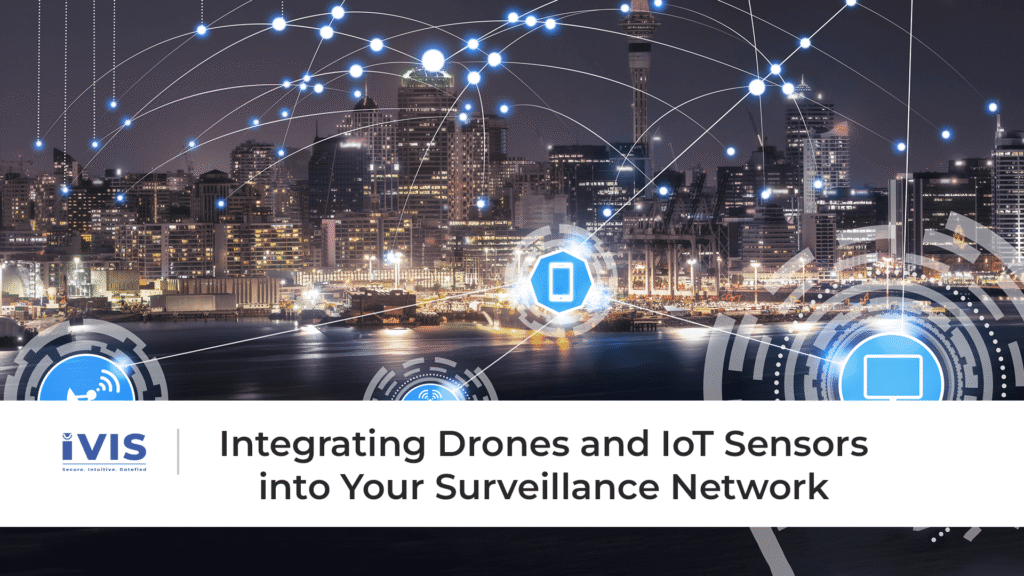
Integrating Drones and IoT Sensors into Your Surveillance Network

Integrating Drones and IoT Sensors into Your Surveillance Network Surveillance is no longer just about static cameras. Technology has transformed the way we monitor, detect, and respond to threats. A modern surveillance network comprises advanced devices, real-time alerts, and automated decision-making capabilities. Drones and IoT sensors are among the most effective tools driving this shift. Together, they offer real-time visibility, fast response, and wide coverage. Integrating these tools can transform your security. It shifts your approach from being reactive to becoming proactive. The Evolution of Surveillance: From Static to Advanced Surveillance has long been a critical component of security operations. However, fixed cameras and manual monitoring have limitations: blind spots, delayed response times, and a heavy reliance on human oversight. The emergence of intelligent surveillance networks has shifted this paradigm. Now, surveillance systems are capable of more than recording. They interpret, analyze, and act on data in real time. The integration of drones with Internet of Things (IoT) devices are driving this transformation even further. This makes surveillance networks dynamic, autonomous, and predictive. Why Drones? Drones, or unmanned aerial vehicles (UAVs), bring mobility and flexibility that traditional surveillance tools lack. They are particularly valuable in scenarios where fixed cameras cannot be deployed or where human personnel are impractical or dangerous to use. Key Benefits of Drone Surveillance Wide Area Coverage: A single drone can quickly and efficiently monitor large perimeters, open fields, or high-risk zones. Real-Time Imaging: Equipped with high-definition cameras, thermal imaging, and even night vision, drones provide real-time, high-quality visuals. Rapid Deployment: Drones can be deployed instantly in response to alerts or emergencies, significantly reducing response times. Reduced Operational Costs: Over time, drones can reduce the need for constant ground patrols, lowering both manpower and resource costs. The Power of IoT Sensors IoT sensors act as the nerve endings of a surveillance network. These small, interconnected devices collect a wide range of environmental and behavioral data. This includes motion, temperature, sound, and vibration. Their power lies in constant, low-maintenance monitoring and instant communication with centralized systems. Applications of IoT Sensors in Surveillance Perimeter Intrusion Detection: Vibration or pressure sensors embedded in fences or ground surfaces can instantly alert the system to unauthorized access. Environmental Monitoring: Temperature, gas, and humidity sensors play a crucial role in industries such as oil and gas or manufacturing. In these environments, anomalies can indicate potential threats or hazards. Asset Tracking: GPS and RFID-enabled sensors allow real-time tracking of valuable assets or vehicles. Behavior Analysis: When combined with AI, motion sensors can detect unusual patterns such as loitering or crowd formation before incidents escalate. Integration: The Intelligence Surveillance Ecosystem Drones and IoT sensors are impressive on their own. However, their true power is unlocked when they are integrated into a unified surveillance network. This is where AI, cloud computing, and data analytics come into play. Imagine a scenario: An IoT sensor at a remote construction site detects unusual vibrations at 2 AM. Instantly, it sends an alert to the central system, which autonomously dispatches a drone to investigate. Within minutes, the drone’s camera captures footage of potential intruders. Simultaneously, the system notifies the security team with live video, GPS coordinates, and recommended actions. That is not sci-fi; it is intelligent surveillance in action. Building a Connected Surveillance Network As security challenges become more complex, isolated systems are proving insufficient. Effective surveillance depends on real-time data, seamless communication, and the integration of adaptive technologies. To build a resilient and responsive surveillance network that integrates drones and IoT, several components must come together: 1. Interoperable Platforms Your system must support seamless communication between diverse devices. Whether it is a drone, a motion sensor, or an access control panel, each should speak the same “language” or be managed via a centralized platform. 2. Edge Computing Processing data closer to the source (on the device or gateway) reduces latency. This is crucial for real-time decision-making, particularly in situations where every second counts. 3. Cloud Integration For large-scale deployments, cloud platforms offer scalability and centralized control. They also enable advanced analytics, AI-powered insights, and the archiving of historical data. 4. AI & Machine Learning AI is the brain behind advanced surveillance. It analyzes patterns, distinguishes between regular and suspicious activity, and even predicts threats before they occur. 5. Cybersecurity A connected network is only as secure as its weakest link. Ensuring data encryption, secure communication channels, and regular software updates is crucial to avoid breaches. Challenges and Considerations Integrating drones and IoT sensors is not without its hurdles. However, these challenges can be mitigated through careful planning and the right technology partners. Regulatory Compliance: In many regions, the use of drones is governed by strict airspace regulations. Ensure you have the necessary permissions and adhere to local laws. Battery Life and Maintenance: Drones and sensors need periodic charging and upkeep. Choose models with energy efficiency and remote management capabilities. Data Overload: The volume of data generated by sensors and drones can overwhelm traditional systems. Invest in intelligent analytics and storage management. Interference and Connectivity: Remote areas often experience weak or unreliable signals. Consider using mesh networks or satellite connectivity in such cases. Real-World Use Cases The integration of drones and IoT is not just theoretical. It is already being applied across various industries to enhance security, efficiency, and responsiveness. These technologies offer scalable solutions tailored to specific operational needs. Critical Infrastructure Security Power plants, water treatment facilities, and data centers are increasingly adopting drone patrols combined with IoT sensors for 24/7 perimeter monitoring. Drones can follow pre-programmed routes, while sensors detect anomalies such as vibrations or chemical leaks. Agricultural Monitoring Farmers use drones to analyze crop health and IoT sensors to monitor soil moisture and weather conditions. This dual setup enables efficient use of resources and helps prevent theft or vandalism. Smart Cities Urban surveillance networks utilize IoT technologies for traffic management, public safety, and environmental monitoring. Drones assist law enforcement during public events, protests, or search-and-rescue missions. Disaster Response After natural disasters, drones provide aerial surveys while

Scroll to Top