Write to us about any queries you have

Contact Form Demo

Watching Over Wellness: The Role of E-Surveillance in Healthcare Security

In the middle of a busy hospital ward, a nurse catches something unusual on the camera feed: a patient has left his bed in the early hours without assistance. Even before an alarm sounds, the system alerts staff and a medical aide arrives in time. Later investigation shows that a fall was avoided, thanks to modern surveillance. 

In the healthcare sector, everything hinges on trust: patients trust caregivers, hospitals trust safety protocols, and regulators trust compliance systems. In that ecosystem, healthcare surveillance systems play a pivotal role. They protect vulnerable patients, safeguard assets, and support rigorous standards such as those set by DISHA-compliant frameworks. In short, they guard both wellness and trust. 
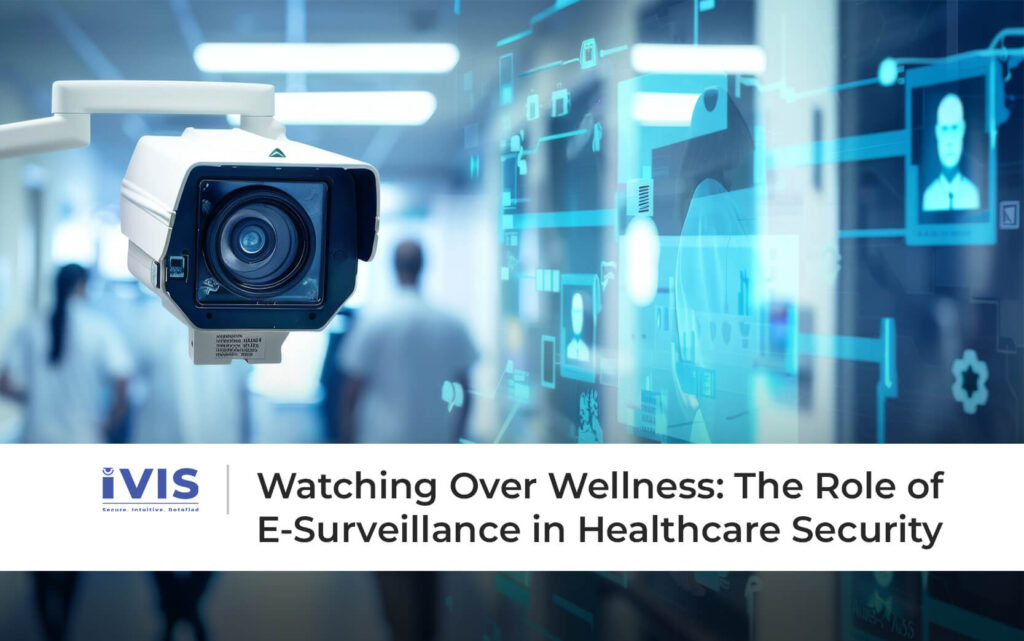
Watching Over Wellness: The Role of E-Surveillance in Healthcare Security

Why Healthcare Needs Modern Surveillance

Hospitals and clinics are high-risk environments: patients with varying mobility, high value equipment, sensitive data, and urgent care needs all converge. According to the World Health Organization, “one in every 14 patients is harmed while receiving hospital care.” At the same time, staff face workplace violence at a rate five times higher than average.  

Traditional security like guards, access cards, CCTV, no longer suffice. The volume of data, the complexity of workflows, and the need for compliance demand a more intelligent approach. That’s where hospital video monitoring and patient safety AI come into play. 

Core Capabilities of E-Surveillance in Healthcare

  • Real-Time Monitoring & Alerting: Advanced systems detect patient exits, bed departures, loitering in corridors, and unauthorized access zones. For instance, a recent study introduced an AI-powered video platform covering over 1,000 days of inference that detected “patient alone” events with strong accuracy. 
  • Asset & Area Protection: Hospitals contain high-value equipment and restricted zones (pharmacies, NICUs, data centres). Video analytics help monitor these areas, deter theft or misuse, and build audit trails. One industry source lists infant abduction, drug diversion and patient elopement among use-cases for healthcare video analytics.  
  • Compliance & Audit Readiness: Healthcare providers must comply with regulations around patient privacy, data retention, and incident investigation. Video surveillance supports this by creating tamper-evident logs, linking physical events with electronic data, and enabling forensic review.  
  • Operational Efficiency & Safety: Beyond security, video data helps improve workflows, identifying bottlenecks in emergency departments, monitoring foot-traffic, managing crowd density in waiting areas, and balancing staff deployment. As one article explains, video analytics enable real-time traffic monitoring and automation in hospital settings.  

Key Benefits Backed by Data

  • Patient safety improvement: Video analytics used in hospitals permitted quicker response to hazards such as falls or restricted-zone intrusion – studies show real-time monitoring increases sensitivity in detecting deterioration.  
  • Security and theft deterrence: Visible surveillance systems can deter up to 97% of would-be thieves, according to industry data.  
  • Reduced liability & improved documentation: Surveillance helps capture evidence of protocol compliance, reducing investigated incidents and strengthening legal standing.  
  • Operational cost savings: Monitoring foot traffic and patient movement allows better resource allocation, fewer delays and fewer incidents, contributing to efficiency gains.  

Challenges and Critical Considerations

  • Privacy & Ethical Concerns: Surveillance in healthcare must respect patient autonomy and confidentiality. Simply placing cameras isn’t enough; policies must outline what is recorded, who accesses it, how long it’s stored, and how identities are protected (e.g., pixelation or anonymisation).  
  • Integration with Clinical Workflows: Security and clinical teams operate differently. If a surveillance alert disrupts a care flow without coordination, it may interfere with patient care. Success depends on aligning technology with operations. A study of nurse monitoring in elder-care notes cameras are helpful but cannot replace human presence.  
  • Data & Technical Quality: Video monitoring effectiveness depends on camera angle, resolution, lighting, and analytics model quality. Without these, false alarms or missed events undermine trust.  
  • Compliance & Cyber-Security: Hospitals handle both physical footage and digital patient data (PHI). Surveillance systems must employ encryption, secure storage, regular audit trails, and comply with standards like DISHA (Digital Information Security in Healthcare Act) and other local healthcare laws. 

Best Practice Framework for Implementation

  1. Define zones & risk thresholds: Map high-risk areas (NICU, emergency, pharmacy) and define what behaviours need monitoring (patient exits, tailgating, intrusions). 
  2. Deploy layered system: Use video, sensors (access control, motion), analytics and alert workflows. 
  3. Establish policies & consent: Communicate to patients and visitors about surveillance, define retention, anonymisation and disclosure. 
  4. Train human operators: Expect humans to interpret context and act, surveillance analytics assist, not replace human judgment. 
  5. Ensure integration & interoperability: Systems must link video feeds with clinical alerts, EHRs or incident reporting tools. 
  6. Monitor performance & tune models: Track metrics like “alerts requiring intervention”, “false positives”, response times. Use feedback to refine analytics. 
  7. Audit & compliance readiness: Maintain secure logs, chain-of-custody for footage, and policy evidence for regulators. 

Insightful Trends on the Horizon

  • AI-Assisted Patient Monitoring: A new dataset and study from 2025 shows computer-vision models in hospital rooms can detect bed-exits and unsupervised movement with high accuracy.  
  • Weapon & Violence Detection: Analytics solutions can detect aggressive behaviour in emergency departments with up to 95% accuracy, helping prevent incidents before escalation.  
  • Privacy-Preserving Surveillance: Emerging frameworks use skeleton tracking or anonymised video to monitor behaviour while protecting identity, particularly relevant for psychiatric or elder-care settings.  
  • Operational Intelligence Fusion: Surveillance data is increasingly linked with EHR data, asset-location systems, and IoT devices to create holistic “care-safety” platforms. 

Conclusion

In healthcare, surveillance is more than just cameras and security, it’s a heart of safety, care quality and compliance. The right system blends advanced healthcare surveillance systems, hospital video monitoring, patient safety AI, and rigorous healthcare data security into a cohesive ecosystem. 

Modern facilities that make this investment do more than reduce risk—they build trust. Patients feel safer. Staff feel protected. Regulators find accountability. At the end of the day, wellness isn’t just delivered, it’s guarded. 

Scroll to Top