
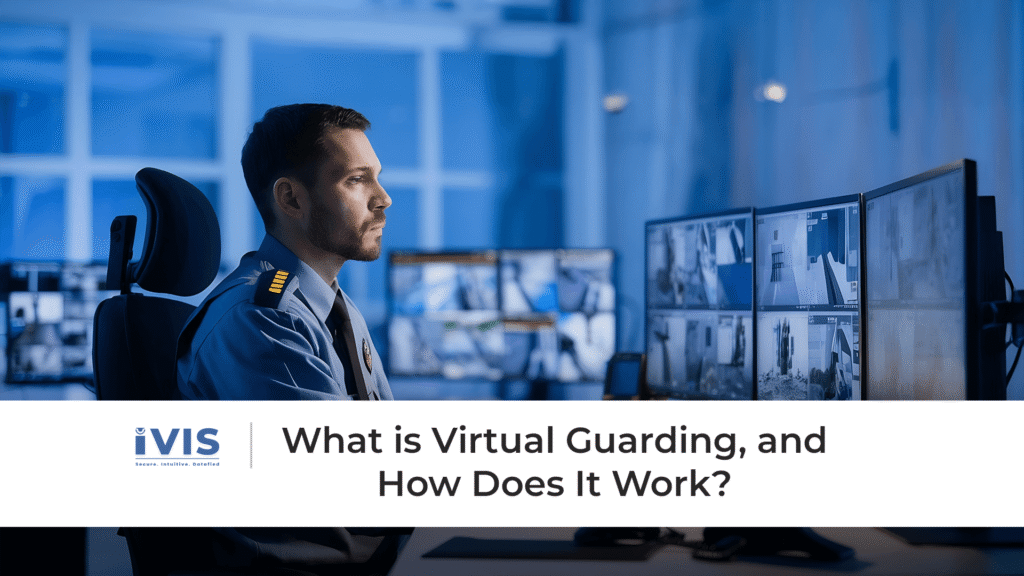
In a world where security threats evolve faster than ever, businesses and property owners face increasing pressure to safeguard their assets. This led to a growing demand for more advanced and proactive security solutions. Traditional security methods like physical guards or passive CCTV systems often fall short in response time, coverage, and cost-efficiency. As a result, many are turning to virtual guarding. The modern, technology-driven approach to security offers real-time monitoring, intelligent threat detection, and faster response at a fraction of the cost.
Virtual guarding, also known as remote guarding or virtual surveillance, is an emerging method of modern security. It combines live monitoring, artificial intelligence, and real-time response systems to provide an effective and scalable solution. But what exactly is virtual guarding? How does it work, and why are organizations across the globe rapidly adopting it?
Let’s explore.
Virtual guarding is a technology-based approach to security that utilizes remote surveillance systems. It also incorporates human oversight to monitor, analyze, and respond to potential threats in real-time.
Rather than relying on on-site guards, businesses employ centralized teams of remote security professionals. They supervise live video feeds from various locations simultaneously. Their work is supported by AI-powered cameras and sensors that continuously scan the environment for unusual activities. Intelligent software then analyzes this data to trigger alerts and issue deterrent actions, such as sounding alarms or flashing lights.
Think of it as having a team of high-tech sentinels watching over your property 24/7, every day of the year.
Virtual guarding is a sophisticated, layered system that blends hardware, software, and human oversight. Here is a step-by-step look at how it typically operates:
The first step involves placing IP-based cameras, motion detectors, microphones, and sensors across the premises. These devices are often embedded with AI for object recognition, motion tracking, and behavioral analysis.
Once operational, the system uses advanced video analytics to monitor environments in real-time. AI models are trained to detect:
Proactive monitoring significantly minimizes false positives. These are frequently associated with traditional motion sensors and basic CCTV systems.
When a potential threat is detected, the system sends an alert to a remote command center. This typically occurs within seconds. Alerts can be filtered and prioritized based on severity.
A trained virtual guard reviews the alert and carefully assesses the live video feed. Based on this assessment, the guard determines whether the threat is genuine or a false alarm, such as an animal crossing or a staff member working late.
Depending on the situation, the virtual guard may:
This layered response ensures fast action, often before the crime is committed.
Virtual guarding is not just about watching video feeds. It is about enabling intelligent, faster decisions. Core features typically include:
Virtual guarding is versatile and scalable, making it suitable for a variety of environments:
Virtual guarding is also gaining importance in smart cities, industrial complexes, and border security.
Two of the biggest drivers of adoption are cost efficiency and scalability. Maintaining physical guards across multiple sites and shifts is expensive and often inefficient.
With virtual guarding:
According to a report, the global video analytics market is projected to grow from $8.3 billion in 2023 to $22.6 billion by 2028. This reflects the increasing demand for intelligent surveillance solutions, with virtual guarding playing a central role.
The next generation of virtual guarding lies in predictive surveillance. Instead of simply responding to threats, modern systems anticipate them using machine learning and behavioral modeling.
These advancements allow systems to:
This shift from reactive to proactive security transforms virtual guarding into a dynamic, intelligent defense system.
As the virtual guarding space matures, companies are looking for integrated, proven solutions. One of the standout players is iVIS, a leader in AI-powered remote surveillance.
With over 15 years of experience, iVIS supports approximately 21,000 sites and monitors over 500,000 devices. Their comprehensive platform combines edge AI processing, real-time alerts, and centralized human verification to deliver seamless, always-on protection.
Here is what makes iVIS a preferred partner:
Whether you are a property manager, a CIO, or a security consultant, iVIS offers a turnkey virtual guarding solution that is cost-effective, intelligent, and highly responsive.
Virtual guarding is more than a technological trend. It is a fundamental shift in how security is delivered and managed. Artificial intelligence, when combined with expert human oversight, enhances the overall effectiveness of modern security systems. This integration offers a more reliable, scalable, and efficient alternative to traditional security models.
Organizations aiming to enhance their security posture while managing costs are exploring more efficient alternatives. Virtual guarding provides a clear and effective solution that also improves operational visibility. With pioneers like iVIS setting new benchmarks in the field, the future of security appears more advanced and significantly safer.