
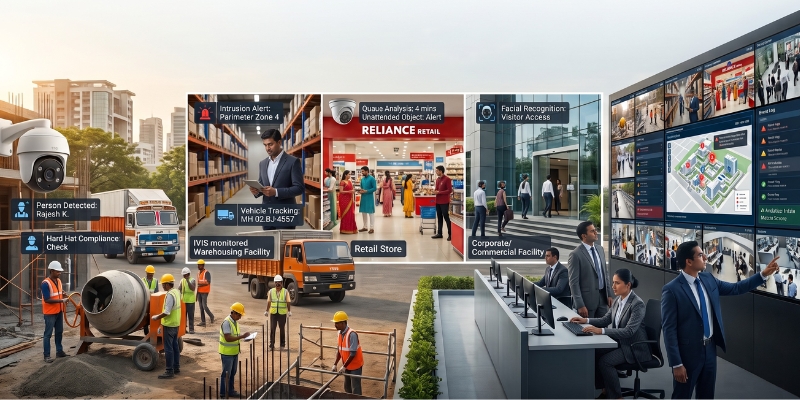
Cameras are everywhere. From construction sites and warehouses to retail floors and entry gates, every frame is being captured. But recording is no longer enough. Modern e-surveillance systems do more than store footage. They analyze. They predict. They deter.
The world has moved beyond CCTV loops and manual review. E-surveillance systems now operate like digital watchdogs, combining hardware and intelligence to create safer spaces. They help businesses prevent intrusions before they escalate and provide evidence only when needed, not as the first line of defense, but as a last resort.
Security is evolving. So are expectations.
Tailgating and unauthorized entry can compromise the entire security of a facility. With face detection technology, access becomes strictly individual. The system grants access only after scanning facial features and matching them with pre-approved identities.
Such a system reduces the risks associated with stolen access cards and shared PINs. Each face is unique. It cannot be borrowed, replicated easily, or left behind at home. Advanced facial recognition algorithms further ensure that even minor changes in appearance are considered.
Security teams require instant insights the moment an incident occurs. Face detection systems offer real-time monitoring. If someone attempts to gain entry using a fake image or altered facial features, the system immediately alerts administrators.
Some systems also flag known blacklisted individuals. When someone on a watchlist is detected, the system alerts the relevant authorities. This is especially important in high-security environments such as research labs, financial institutions, and government facilities.
These devices do more than open doors. They serve as intelligent access control systems. Companies can assign access zones based on job roles. A finance department employee may not need access to an industrial warehouse. These distinctions can be programmed into the device, eliminating the need for multiple keys or badges.
It also simplifies operations for HR and IT departments. With a single scan, the system logs entry and exit times, reducing the need for manual updates and spreadsheets.
Global events underscored the importance of hygiene. As a result, many businesses adopted contactless technologies. Face detection devices support this shift. Unlike fingerprint scanners or ID cards that need physical contact, these systems are 100% touchless.
No more queues at biometric readers. No more concerns over multiple people touching the same surface. This also means fewer maintenance issues related to the wear and tear of keypads or card readers.
Time theft costs employers billions every year. Traditional time clocks are often manipulated. Face detection solves this. It confirms employee identity and automatically logs working hours. This data feeds directly into payroll systems.
Accuracy is higher. Employees are held accountable for the hours they work. Managers spend less time correcting attendance reports. This boosts productivity and ensures fair wage practices.
In emergencies, knowing who is inside a building can save lives. Face detection devices help track occupancy in real-time. During a fire or lockdown, the system generates instant reports. It shows who entered, when, and whether they exited.
Security teams can share this data with emergency responders. In critical moments, having this visibility can make all the difference. Manual logbooks or card swipes can never offer this kind of accuracy and immediacy.
Modern security systems thrive on integration. Face detection devices connect with surveillance cameras, alarms, motion detectors, and even HVAC systems. This enables intelligent decision-making.
For instance, if someone enters a restricted zone without authorization, the system can immediately lock the doors. It can also trigger alarms and notify security within seconds. This kind of automation was impossible with manual systems. Integration also enhances energy efficiency. Lighting and air conditioning systems can be activated based on face-based presence detection, reducing unnecessary usage.
Face detection devices collect data every time they scan a face. This data offers valuable insights. Security managers can analyze foot traffic, peak entry times, or frequent zone crossings. These insights help optimize workflows and refine security protocols.
Such analytics are not just limited to security. HR can track attendance patterns. Facility managers can assess occupancy trends for better space planning. Businesses can make intelligent, evidence-based decisions using data that was previously inaccessible.
Managing external visitors has always been tricky. Paper logbooks are slow and insecure. Face detection devices simplify this. Visitors can pre-register by uploading a selfie or have their photo captured upon arrival. Their details are stored for compliance and follow-up if needed.
The system restricts their movement to approved zones. It also keeps time-stamped records of their entry and exit. This improves security and enhances the visitor experience. MarketsandMarkets reports that the facial recognition market is projected to grow from USD 5.1 billion in 2023 to USD 12.7 billion by 2028. This surge reflects growing trust and adoption in both the private and public sectors.
Not all threats come from outsiders. Employees with malicious intent can do considerable harm. Face detection creates digital trails. It logs every movement and every door unlocked.
This discourages internal breaches. Employees know they are being monitored by systems that do not forget. If something goes wrong, forensic analysis becomes easier. You can trace who was where, at what time, and for how long.
Numerous industries must adhere to strict safety regulations and data protection laws. Face detection systems help meet these regulations. Whether it is GDPR compliance in Europe or OSHA requirements in the US, these systems offer built-in features for secure data handling.
Access logs are encrypted. Permissions are role-based. Only authorized personnel can view, export, or manipulate the data. This ensures that sensitive employee information is protected, reducing legal risk.
Companies with multiple offices or branches face a challenge in standardizing access control. Face detection systems scale easily. A centralized dashboard allows seamless management of devices across numerous cities and countries.
Updates roll out remotely. Policies can be unified. Admins don’t need to fly across locations to audit or fix systems. This centralization reduces operational costs and increases control.
Face detection devices are transforming workplace security. They offer unmatched accuracy, speed, and efficiency in verifying identities, controlling access, and generating valuable insights. These systems go beyond opening doors. They help prevent threats, automate processes, and build trust through transparency.
IVIS, in partnership with Scanalitix, provides advanced, scalable face detection and AI-powered e-surveillance solutions for modern workplaces. With a strong global presence and proven expertise, IVIS helps organizations enhance security through real-time monitoring, intelligent alerts, and seamless system integration. Their solutions support a wide range of industries, enabling safer, more efficient, and future-ready workplaces.