
Write to us about any queries you have

Contact Form Demo

Intelligent Surveillance

E-Surveillance in Smart Cities - Building Safer Urban Futures
Blog

E-Surveillance in Smart Cities – Building Safer Urban Futures

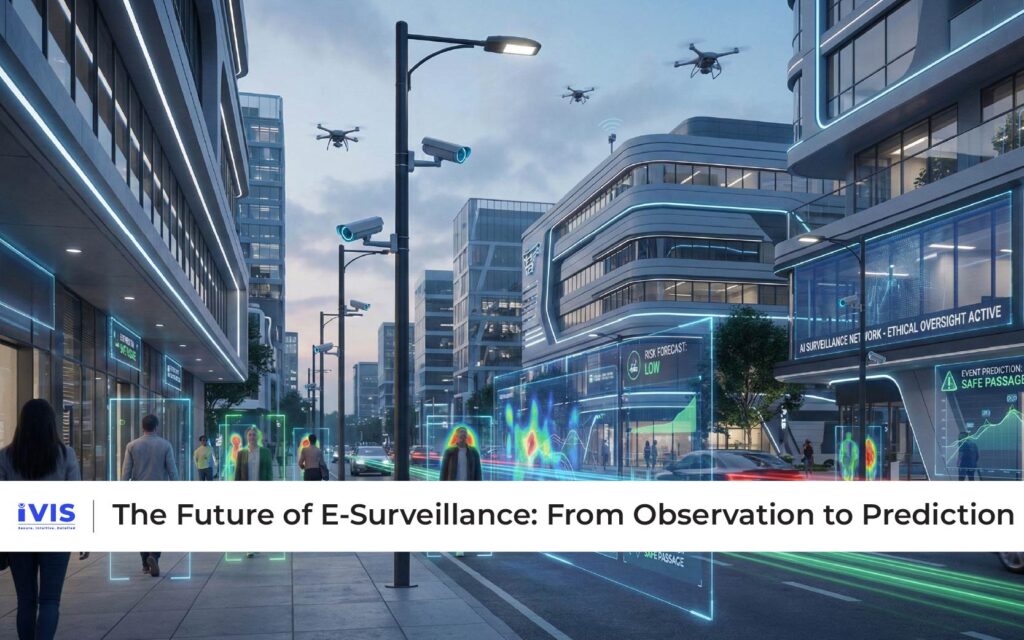
E-Surveillance in Smart Cities – Building Safer Urban Futures It was a busy evening in the city square. The sun had just dipped below the skyline. A group of boys gathered near the bus stop; a delivery robot zipped past, and thousands of phones lit up the sidewalks. Behind the scenes, a hidden group of sensors, cameras, and AI-enabled systems hummed with life.   A sudden alert: the system flagged an object left unattended in a busy pedestrian lane. Within seconds, a security operator received the alert, a camera switched to zoom, and a patrol was dispatched. What might have been a threat was a quickly resolved incident.  This is the new reality of e-surveillance in smart cities – where visibility, analytics and responsiveness merge to help shape safer, more resilient urban environments. As cities grow in size and complexity, traditional security models fall short. The integration of advanced video analytics, networked sensors and real-time monitoring platforms means that surveillance is no longer just reactive – it becomes proactive, strategic and integral to urban life.  The Smart Cities Context: Why Surveillance Matters Global urbanization is speeding up, according to a report by Grand View Research, the global smart cities market is projected to reach USD 3,757.9 billion by 2030, with a compound annual growth rate (CAGR) of 29.4% from 2025-2030.  Within this massive expansion, city surveillance plays a foundational role: one market estimate shows that the city-surveillance segment registered USD 49.5 million in 2024 and is expected to reach USD 183.2 million by 2030 (CAGR ~26.2%).   In India for example, under the Smart Cities Mission, an IIM-B study found that 59,802 CCTV cameras and emergency call boxes were installed across 93 smart cities, contributing to improved real-time crime tracking and reducing overall crime in a sample city (Nagpur) by ~14%.  These numbers reflect a key truth: in the smart city paradigm, public safety and surveillance infrastructure are inseparable. As urban densities rise, traffic flows intensify, and threats become more varied (from theft to crowd incidents to infrastructure failures), the value of intelligent surveillance systems becomes clear.  What E-Surveillance in Smart Cities Looks Like When we talk about e-surveillance in the smart city context, we refer to a layered ecosystem:  Networked video & sensor feeds: Cameras, IoT sensors, vehicle/people counters, environmental detectors.  Integrated command centres: Lines of sight converge in an Integrated Command & Control Centre (ICCC) where analytics and alerts are monitored.  AI and video analytics: Behavioral detection, anomaly detection, crowd or traffic flow analysis, loitering detection, unattended object alerts.  Real-time response & orchestration: Alerts trigger patrols, automated gates, traffic diversions, public alerts.  Data fusion & urban operations: The surveillance data informs traffic management, event planning, urban policing, infrastructure resilience.  For example, a retail district camera might identify a cluster forming late at night (potential loitering or illicit meet-up) and reroute a patrol. A transit hub sensor might alert when crowd density reaches unsafe levels, triggering escalator slow-down or station closure. All of these capabilities rest on the backbone of e-surveillance infrastructure.  Key Benefits of Smart City E-Surveillance Enhanced Public Safety & Crime Reduction: By enabling real-time tracking of incidents and enabling faster responses, cities report meaningful improvements. The IIM-B study showed a ~14% decline in crime in one city after deploying surveillance under the Smart Cities Mission.  Faster Incident Response & Efficiency: Modern analytics reduce reliance on purely manual monitoring. According to a case‐study, AI-powered urban surveillance systems can reduce manual patrol burdens and response times by up to ~40%.  Improved Resource Utilisation & Urban Operations: Surveillance data helps optimise patrol routes, street-lighting schedules, evacuation planning, traffic control, delivering efficiency. Data-Driven Urban Planning: Surveillance feeds provide insights into crowd flows, hotspot behaviours, mobility bottlenecks, enabling smarter design of urban infrastructure. Market Growth Reflects Strategic Value: The city-surveillance market is growing rapidly: e.g., the global urban video surveillance networks market is projected to grow from USD 53.2 billion in 2024 to USD 148.2 billion by 2033.  Challenges & Considerations While the potential is significant, implementation comes with hurdles:  Privacy & Ethical Concerns: Constant monitoring raises questions about civil liberties, data protection, and transparency. Systems must include safeguards, anonymization, and clear policies.   Integration & Legacy Systems: Many cities must manage legacy CCTV, variable network infrastructure, and piecemeal sensor deployments, making integration complex.  Data Overload & Analytics: Vast data flows only matter if analytics, alerts and orchestration can effectively interpret them, otherwise the system becomes noisy.  Maintenance & Operational Costs: Cameras, sensors, network infrastructure, data storage and AI algorithms all incur cost and require upkeep.  Equity & inclusion: Surveillance must not unfairly target particular communities or produce biased outputs; ethical design and oversight are essential.  Implementation Gaps: For example, in one Indian city, ~50% of smart-city cameras were reported by police as non-functional, impacting real-time monitoring capability.   Deployment Strategy: How IVIS Helps For cities planning or scaling e-surveillance systems, IVIS with Scanalitix offers a strategic approach:  Scalable Platform Architecture: From 500 to 50,000 cameras/sensors, the platform handles the scale.  AI-Driven Video Analytics: Integrated modules for behaviour detection, traffic/ crowd analysis, public safety scenarios.  Integrated Command & Control: A unified ICCC view where alerts are triaged, patrols dispatched, events logged and analytics visualised.  Privacy-First Design: Anonymisation, data retention policies, role-based access control, audit logs, to support ethical use.  Hybrid Cloud / Edge Deployment: Ensures redundancy, low latency and flexibility for both dense urban hubs and remote zones.  Continuous Learning & Optimisation: System adapts over time, false-positive reduction, model refinement, event-history feedback loops.  By aligning smart city goals (safety, efficiency, transparency) with a robust e-surveillance foundation, IVIS enables cities to move beyond surveillance as a cost-centre to a strategic urban asset. The Future: Towards Autonomous Urban Intelligence Looking ahead, the evolution of e-surveillance in smart cities will involve:  Edge Analytics + AI Collaboration: Real-time detection and local decisioning, combined with central orchestration and predictive modelling.  Predictive Urban Analytics: Not just reacting to incidents, but forecasting where crowd surges, public disturbances or infrastructure stress may occur — enabling preventive action.  Multi-Modal Sensor Fusion: Cameras, audio sensors (gunshot detection), environmental

How Continuous Monitoring Ensures Zero Blind Coverage
Blog

How Integrated Detectors, Cameras, and Alerts Strengthen E-Surveillance Systems 

How Integrated Detectors, Cameras, and Alerts Strengthen E-Surveillance Systems E-surveillance systems deliver robust security through synergy. Integrated detectors, cameras, and alerts give a unified approach to monitoring. Cameras capture real-time visuals, detectors sense motion, sound, or environmental changes, and alerts notify teams instantly. That combination makes surveillance systems smarter, faster, and more reliable. Businesses reduce response times while increasing situational awareness.  These systems grow beyond basic monitoring. They now combine technology, intelligence, and usability. Security becomes proactive instead of reactive. Integrated platforms bring precision and clarity to operations in environments where human observation alone cannot keep up. That is why adoption continues to grow across industries. Why Integration Matters in E-Surveillance Systems Security depends on speed, clarity, and accuracy. Detectors, cameras, and alerts each play a role on their own, but integration makes them far more effective. When these components work together within systems, they create a unified shield that enhances detection, reduces errors, and ensures a faster response.  Unified visibility: Detectors sense anomalies, such as motion, broken glass, and temperature shifts. Cameras immediately focus on those zones. Alerts notify security staff. That loop shortens detection-to-action time. E-surveillance systems act as an alternative to relying on manual monitoring.  Fewer false alarms: Motion alone triggers many false alerts. Integration filters noise. Detectors verify presence. Cameras confirm visually. Alerts go out only when both detect and record. That method lowers false alarms and boosts confidence in surveillance systems.  Faster response: Teams get push notifications or SMS alerts. Cameras provide context instantly. Teams act faster. That speed matters in theft, fire, or intrusion. Smart surveillance systems deliver safety and quick reaction.  Intelligent resource use: Security centers monitor dozens of feeds. Integration triages incidents automatically. Alerts go only for genuine threats. Teams stay focused. That discipline raises efficiency. These systems direct attention where it matters. Applications of Integrated E-Surveillance Systems Integrated detectors, cameras, and alerts bring value across many industries. Each environment faces unique risks, and surveillance systems adapt to meet those challenges with precision and reliability.  Retail: Store managers use detectors to spot unauthorized movement after hours. The cameras roll automatically. Alerts notify store personnel. Loss incidents drop.  Smart cities: Municipal teams deploy detectors in high-traffic zones. When detectors sense congestion, cameras activate. Alerts help manage crowd flow quickly. E-surveillance systems improve safety and urban planning.  Healthcare facilities: Hospitals link detectors in operating zones. Cameras focus on sensitive zones only when detectors sense motion. Alerts go to security teams. That system respects patient privacy yet maintains vigilance.  Logistics and warehousing: Detectors sense open doors or unauthorized access. Cameras activate automatically. Alerts inform supervisors. That setup prevents theft and inventory loss effectively.  Airports and transport hubs: Airports rely on detectors for baggage screening and perimeter breaches. Cameras capture exact moments of intrusion. Alerts allow rapid response from airport security. Integration minimizes risks in crowded, high-stakes environments.  Educational institutions: Schools use detectors near restricted zones. Cameras verify unauthorized access. Alerts keep administrators informed. Surveillance systems safeguard students and staff in real time.  Banks and financial institutions: Detectors track unauthorized vault or ATM access. Cameras support visual evidence. Alerts trigger immediate lockdowns. Financial institutions trust surveillance systems for layered security.  The global video surveillance market grows fast. Analysts estimate it will grow from USD 64.1 billion in 2023 to USD 209.1 billion by 2033, with a compound annual growth rate of about 12.6 percent. That growth implies rising adoption of integrated e-surveillance systems.  Benefits Beyond Security E-surveillance systems do more than protect spaces. When detectors, cameras, and alerts work together, organizations gain operational advantages that extend into efficiency, cost savings, and smarter decision-making.  Data-driven insights: Integration collects data from detectors and cameras. Facilities analyze patterns: peak motion times, areas of frequent alerts. That data helps optimize staffing and layout. E-surveillance systems transform reactive security into proactive planning.  Cost efficiency: Automated alerts cut reliance on manual monitoring. Staff can focus on priority incidents. Energy-efficient detectors and cameras reduce operating costs. Organizations save long-term by investing in integrated e-surveillance systems.  Staff productivity: Teams work smarter, not harder. Integration cuts noise, leaving only relevant alerts. Security teams face less stress. Productivity rises, morale improves.  Scalability: Organizations start with a few integrated points. They expand as needs grow. E-surveillance systems grow modularly without disruption.  Regulatory compliance: Industries follow privacy rules. Integrated systems let organizations activate cameras only upon detector triggers. That limited surveillance balances compliance and safety. E-surveillance systems respect policies and reduce exposure.  Technologies Enhancing Integration Modern innovations push e-surveillance systems beyond simple monitoring. Technologies such as AI, IoT, and edge computing connect detectors, cameras, and alerts into a seamless network that delivers faster, sharper, and more intelligent security.  Edge computing: Systems process detector data locally. Cameras and alerts activate without cloud dependency. That design reduces latency and bandwidth demand. Modern e-surveillance systems stay fast and reliable with minimal infrastructure strain.  AI-powered analytics: AI filters motion patterns, identifies behaviors. Detectors feed AI algorithms. Cameras confirm suspicious activity visually. Alerts escalate only upon smart confirmation. E-surveillance systems become intelligent, not just connected.  IoT connectivity: Sensors, detectors, and cameras connect through IoT platforms. Alerts sync with facility management systems. Fire alarms, lighting, and HVAC integrate seamlessly. E-surveillance systems evolve into building intelligence networks.  Cloud integration: Cloud platforms centralize feeds, alerts, and logs. Teams monitor from anywhere. They can review footage, fine-tune detector sensitivity, and manage alerts from any location. E-surveillance systems offer flexibility and centralized control.  Mobile alerts: Smartphones receive instant push alerts. Images or short clips accompany notifications. Security teams get context immediately. That feature boosts the responsiveness of e-surveillance systems.  Cybersecurity reinforcement: Integration means more data flow. Strong encryption, firewalls, and secure protocols protect networks. E-surveillance systems defend against both physical and digital threats.  Future Outlook for Integrated E-Surveillance Systems Integration continues to advance. Future systems will combine detectors, cameras, and alerts with predictive intelligence. Instead of reacting to motion, AI will forecast risk based on behavioral trends. Drones may act as mobile cameras connected to detectors on the ground. Wearable devices for staff could sync with alerts,

Modern E-Surveillance Systems That Do More Than Record
Blog

Modern E-Surveillance Systems That Do More Than Record

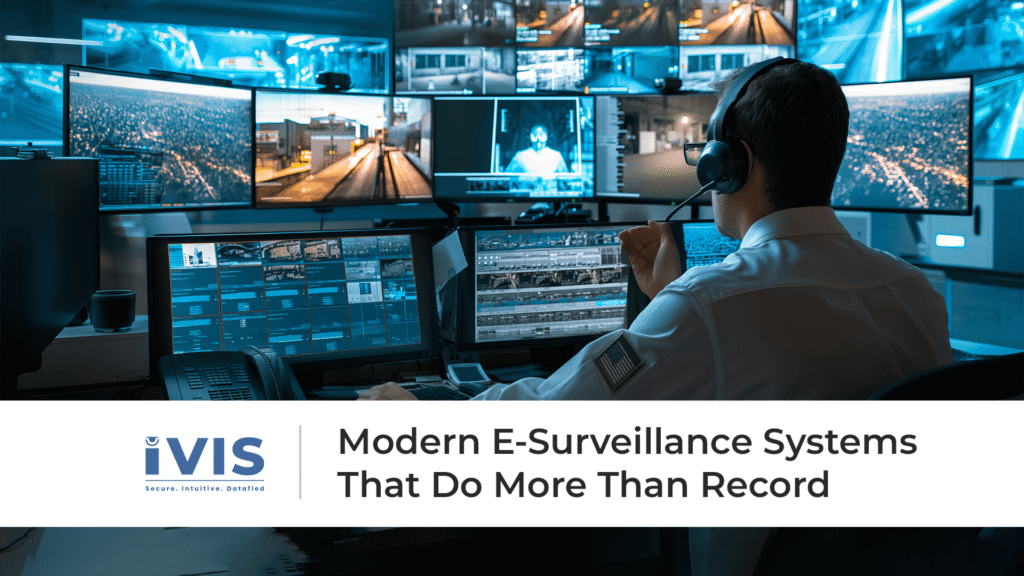
Modern E-Surveillance Systems That Do More Than Record Cameras are everywhere. From construction sites and warehouses to retail floors and entry gates, every frame is being captured. But recording is no longer enough. Modern e-surveillance systems do more than store footage. They analyze. They predict. They deter. The world has moved beyond CCTV loops and manual review. E-surveillance systems now operate like digital watchdogs, combining hardware and intelligence to create safer spaces. They help businesses prevent intrusions before they escalate and provide evidence only when needed, not as the first line of defense, but as a last resort. Security is evolving. So are expectations. E-Surveillance That Thinks Old-school surveillance caught what had already happened. Modern e-surveillance systems prevent it from happening. They identify patterns in movement, track unusual behavior, and raise alerts when something feels off. This is not basic motion detection. Such systems enable intelligent behavioral mapping. A loitering individual in a loading bay. A vehicle is parked in a restricted zone after hours. Repeated movement near a fence line can signal a potential breach and prompt immediate action. Intelligent e-surveillance tools catch what people often overlook. Real-Time Audio Intervention Video is no longer the only medium. Many e-surveillance systems now include audio capabilities, and they speak, quite literally. When a potential intruder steps into a restricted area, they hear a warning. “This is a monitored site. You are under surveillance.” These voice-down alerts act as first-level deterrents. In many cases, the audio cue is enough to make the person leave without any confrontation. These systems create a presence, even when a guard is not on-site. Thermal, Infrared, and Beyond Modern e-surveillance systems operate regardless of weather or lighting. Thermal imaging picks up body heat in pitch darkness. Infrared sees through fog or smoke. Sensors monitor temperature spikes and mechanical failures. On industrial sites, these tools do more than protect from theft. They prevent equipment failure, detect fires early, and even save lives. A smart camera that flags an overheating generator can prevent costly downtime. License Plate Recognition Access control is becoming automated. With License Plate Recognition (LPR), e-surveillance systems no longer require guards to log entries manually. Plates are scanned, verified against authorized databases, and access is either approved or denied instantly. The feature enables seamless gate access for employees and guests. The system also immediately flags unauthorized vehicles. It also builds a searchable log for security teams to reference later. Audio Analytics Surveillance now listens. Audio-based analytics can detect sounds like shattering glass, gunshots, screams, and aggressive tones. This adds a layer of context. A loud bang at midnight? It could be a gate being forced open. An argument in a retail aisle? It could escalate to violence. These features allow e-surveillance systems to respond more quickly. When combined with automatic alerts or voice-down systems, their effectiveness increases significantly. Crowd and Loitering Detection Retailers and event venues use e-surveillance systems to study foot traffic, prevent overcrowding, and ensure safety. Large groups that form suddenly can be flagged. Individuals who linger near exits or high-value displays are tracked discreetly. These insights protect assets and improve layout planning. Businesses get safer. Customers get smoother experiences. Remote Monitoring Security no longer relies on being physically on-site. With cloud-connected systems, one team can monitor multiple sites in real time. Alerts are centralized. Actions are immediate. Anomalies get flagged. Audio cues are triggered. Events are logged with tags and time stamps. A security specialist sitting miles away can intervene through speakers and dispatch teams if needed. This scalability makes e-surveillance systems a preferred choice for distributed operations. Retail chains, warehouses, logistics companies, and schools all benefit from centralized control. Data-Backed Decision Making AI-enabled cameras don’t just record; they learn. Over time, they identify patterns. Modern systems recognize repeat offenders. These tools understand peak hours and offbeat behavior. With every frame analyzed, reports are generated. These insights inform staffing decisions, optimize shift timing, and improve safety planning. Security is no longer a cost center. It is a data source. According to Statista, the global intelligent security camera market is expected to reach $39 billion by 2030. This growth is powered by demand for analytics-driven safety tools. E-surveillance systems now do more than record. Integration with Emergency Protocols When something goes wrong, speed matters. Advanced surveillance systems can automatically trigger a chain of responses. Lock doors. Notify emergency contacts. Alert law enforcement. Activate lights and sirens. Time lost in decision-making can be life-threatening. Automation removes the delay. AI Filters Out False Positives False alarms waste time. They desensitize teams. They cost money. AI helps reduce this. It learns the difference between a dog and a human. A branch and a person. A passing vehicle and one parked where it should not be. The more it learns, the sharper it gets. Over time, e-surveillance systems become smarter and more accurate. Built for Every Environment One size never fits all. A school requires a different surveillance logic than a construction yard. A retail outlet needs different coverage than a corporate campus. Intelligent surveillance systems are configurable. They adapt to places and priorities. Certain systems track entry and exit logs. Others detect dangerous tools left out. Many focus on perimeter breaches. Each environment gets its rulebook. Scalability Without Complexity Adding new cameras or sensors no longer needs a system overhaul. Modular e-surveillance systems expand smoothly. New zones are integrated through a single dashboard. Remote teams can manage updates, upgrades, and calibration from anywhere. Such flexibility is critical for fast-growing businesses. No disruption. No downtime. Cybersecurity Matters Too A surveillance system that is connected must also be protected. Modern solutions offer encrypted video streams, role-based access controls, and real-time detection of potential data breaches.  Security is not just physical anymore. Cyber protection is built into every layer. IVIS Delivers Advanced E-Surveillance Advanced security is not optional. It is expected. E-surveillance systems are no longer static watchers. These systems act as proactive defenders. They see, hear, learn, and respond. This technology turns footage into foresight. IVIS delivers these modern

The Shift to Intelligent Surveillance in Healthcare
Blog

The Shift to Intelligent Surveillance in Healthcare

The Shift to Intelligent Surveillance in Healthcare Intelligent surveillance is transforming healthcare environments. Medical teams face rising patient complexity, higher safety demands, and an urgent need for efficiency. Outdated monitoring systems can’t keep up. Facilities need advanced solutions, and intelligent surveillance provides them. Healthcare now demands continuous insight around the clock, not just observation. Administrators look for systems that reduce risk. Clinicians need tools that support faster response times. Patients expect a higher level of safety. Technology must go beyond cameras and alerts. It must provide real-time intelligence that drives decisions. That is what intelligent surveillance does. Conventional Monitoring Can’t Keep Up Most hospitals still rely on manual observation, video footage, and periodic rounds. These methods miss events and consume staff hours. Relying heavily on human attention makes them vulnerable to fatigue and error. Security footage often goes unreviewed. Logs do not connect with EMRs. Staff can’t be everywhere at once. Patient falls, unauthorized access, and sudden medical deterioration often go unnoticed until it’s too late. Workforce shortages amplify the problem. A single nurse is responsible for monitoring multiple patients and systems. Manual workflows often lead to gaps in observation. Technology must fill those gaps. What Intelligent Surveillance Offers Intelligent surveillance replaces reactive monitoring with real-time, AI-powered insight. These systems combine video analytics, machine learning, and sensor data to detect unusual behavior. They recognize patterns and alert staff instantly. Hospitals shift from watching to knowing. Instead of waiting for something to go wrong, intelligent systems anticipate risk and notify the right people. Surveillance becomes an active tool, not a passive one. Capabilities include: Bed-exit detection and fall prevention Facial recognition for secure access Real-time location tracking of staff and equipment Heat mapping for workflow optimization Contactless vital signs monitoring Alert generation based on predictive modeling These systems reduce alarm fatigue by filtering out false alerts. These systems connect with hospital infrastructure, including electronic medical records, security systems, and building access controls. Surveillance becomes a hub of insight, not an isolated system. AI and Computer Vision in Action AI powers intelligent surveillance. Algorithms learn patient behavior, staff patterns, and normal activities. They detect changes in posture, facial expression, movement, and walking speed. The system responds in real-time. Computer vision detects when a patient leaves the bed or enters a restricted area. It recognizes aggressive behavior or distress. It can even assess pain levels through facial analysis. These insights help staff intervene faster and more effectively. The system evolves with use. More data equals better detection. Hospitals benefit from self-learning surveillance that adapts to changing environments. A Proven Impact Across Care Settings Hospitals, clinics, and elder care facilities already use intelligent surveillance to improve outcomes. ICU nurses receive alerts when patients show signs of deterioration Behavioral health units prevent escalation by detecting early agitation Long-term care centers avoid falls by recognizing risky movements Emergency departments manage crowd flow with real-time analytics Infection control teams trace exposure through movement data According to a 2023 MarketsandMarkets report, AI in the healthcare market will grow from $20.9 billion in 2024 to $102.7 billion by 2028. This surge reflects the increasing reliance on intelligent technologies for care delivery and operational management. Hospitals can’t afford not to adopt intelligent surveillance. Lives depend on fast, accurate detection and action. Security and Compliance in Focus Surveillance must respect privacy and regulatory demands. Intelligent surveillance systems use encryption, secure access controls, and audit logs to ensure data protection. They anonymize footage, limit access based on roles, and track every system interaction. Healthcare facilities must comply with HIPAA, GDPR, and local regulations. Intelligent surveillance helps achieve compliance. It provides full traceability, secure storage, and real-time access logs. Data is both protected and actionable. Hospitals also benefit from transparency. Visitors and patients see signage explaining surveillance use. Trust grows when patients know surveillance exists for their safety, not intrusion. Intelligent Surveillance vs. Traditional CCTV CCTV systems record. Intelligent surveillance interprets. That difference matters. CCTV is reactive. Intelligent surveillance is proactive. CCTV requires human review. Intelligent surveillance analyzes events in real-time. CCTV footage often sits unused. Intelligent surveillance drives live alerts and dashboards. CCTV is siloed. Intelligent surveillance integrates with hospital systems. This shift delivers value beyond safety. Facilities gain operational efficiency, staff workflow optimization, and better clinical outcomes. Why IVIS Leads in Intelligent Surveillance IVIS provides intelligent surveillance solutions tailored for modern healthcare environments. The platform integrates artificial intelligence, video analytics, and secure infrastructure into a unified system. These solutions enhance clinical workflows, strengthen facility security, and reduce administrative workload. With IVIS, healthcare organizations gain access to: Real-time risk alerts for patient safety Integrated dashboards across multiple hospital systems Secure facial and behavior recognition Flexible zone settings for different departments Custom reporting and data export for audits and reviews The IVIS team collaborates with healthcare providers to implement solutions optimized for specific care settings, including intensive care units, geriatric wards, emergency departments, and mental health facilities. This approach enables organizations to stay ahead of potential risks rather than respond after the fact. Operational Benefits Intelligent surveillance improves more than safety. It enhances efficiency across the board. Reduces false alarms and alert fatigue Lowers response time to patient distress Reduces liability through incident documentation Optimizes staff allocation via heatmaps Tracks resource usage for cost control Enhances regulatory reporting with digital audit trails Hospitals that use intelligent surveillance report higher staff satisfaction, improved patient feedback, and reduced incidents. Technology enables people to work smarter, not harder. Implementation Doesn’t Disrupt Intelligent surveillance improves more than safety. It enhances efficiency across the board. Reduces false alarms and alert fatigue Lowers response time to patient distress Reduces liability through incident documentation Optimizes staff allocation via heatmaps Tracks resource usage for cost control Enhances regulatory reporting with digital audit trails Hospitals that use intelligent surveillance report higher staff satisfaction, improved patient feedback, and reduced incidents. Technology enables people to work smarter, not harder. Implementation Doesn’t Disrupt IVIS designs systems for seamless integration. Implementation does not require significant infrastructure changes. The solution works with existing networks, camera systems,

Scroll to Top